Hollywood has never been short on tough talk. Yet the people who worked for Carl Laemmle did not first describe him as ruthless, or even as a visionary. They called him Uncle Carl. The nickname stuck because it felt true.
In a trade that rewarded sharp elbows and secrecy, Laemmle built a studio culture that moved on warmer fuel that incorporated loyalty, small human courtesies, and an almost old world sense that business works best when people feel seen.
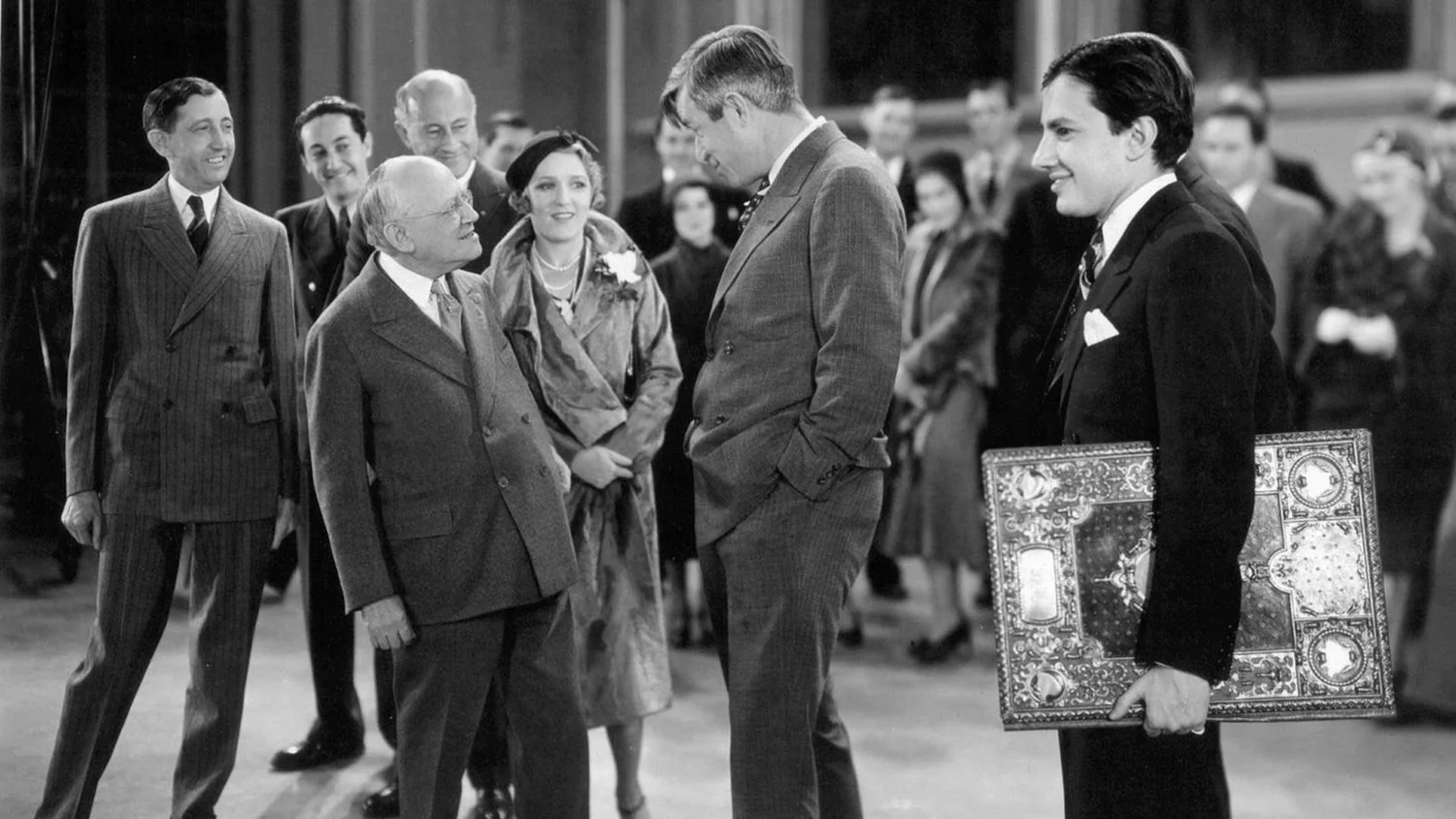
You can hear it in the way he spoke to his sales force. At a 1930 Universal convention he did not pound the table or rehearse a legend. He kept the talk short and reminded them to sell to the best houses first, then to the rest, and to squeeze “every last dollar that the law allows.”
The room laughed at his dry asides. What lingered was not the money talk. It was the way he made each person feel like a partner in the enterprise. It’s said that he spoke to them as friends and colleagues, not as subordinates, and that every man there took the assurance to heart because it rang true. It was Uncle Carl talking to a room full of nephews.
That tone did not make him soft, it made him trusted. People knew he had fought a monopoly in public and in print. He defended exhibitors who could not afford to raise prices on their working class audiences.
He published the Trust’s bullying letters and dared showmen to assert their rights. He called out penalties and licensing tricks that kept the little houses in a choke hold. He liked to say that he was the friend of the little men. The record backs him up.
Inside his own shop, he treated talent and crews with a mix of respect and clear rules. A favorite detail from the Universal City chapter reads like a manifesto in a single paragraph. No performer, the policy said, should ever be asked to take even the smallest personal risk.
If an actor felt a scene carried a hazard, they had the right to refuse it without prejudice to employment. In the age of silent pictures, when stunts were often improvised and safety culture was thin, this was not a sentimental flourish. It was a choice to elevate people over spectacle.
His generosity did not stop at the studio gate. When producer Thomas Ince lost his Santa Monica plant to a fire while halfway through The Battle of Gettysburg, Laemmle wired from New York with instructions that Ince should have unrestricted use of the Universal plant and stores. The telegram ended with five words that say everything about the man. Do not charge a cent. Ince, who could hardly believe it, said simply that no other man would do that.
The warmth people felt toward him had roots in habits he never shed. He kept the penny wise discipline of a shopkeeper, and married it to a stubborn decency about how you treat colleagues. He was generous in praise when the work was good, blunt when it was not, quick with dry humor, and famous for personal generosities.
A writer who knew the industry called him “the whitest man in the industry.” The remark was not about business wins. It was about character that people could rely on.
He built affection the same way he built distribution. He answered mail, and told field staff to write with anything they heard about public taste, and he promised to read it himself. He made people feel that their impressions mattered. That kind of attention created a feedback loop that was practical and human. It kept Universal close to the audience and kept the audience close to Universal.
Even his famous showmanship leaned toward inclusion. At Universal City he opened the gates to visitors so they could watch picture making from a grandstand. It turned production into a civic pageant and turned spectators into witnesses.
The practice ended when microphones arrived and open sets became untenable. While it lasted, it announced a studio ethic. The work is not a secret. The work is a craft, and you belong in the story of how it gets done.
Laemmle’s loyalty also reached backward, to the town where he was born and to the people who helped him when he had nothing to trade but nerve. After the First World War, he used his Saturday Evening Post column to organize relief for families in southern Germany.
He sent money from his personal fortune and asked his vast American readership to send clothing and funds. He specified that aid be divided equally between Jewish and Christian families. He knew the risk to his business reputation and did it anyway.
The same instinct shows up in quieter details. He kept lifelong habits that tied present power to old bonds. He made sure a longtime Chicago porter was always on the platform when he passed through. He carried the same feather pillow.
He liked an old car because the back seat felt right. The book contrasts this nostalgia with a constant readiness to spend freely when the work demanded it, and with a habit of giving people a first chance and sometimes a second.
In 1915, for example, he worked with Sing Sing’s chief warden to find jobs for ex convicts who had earned release with good records. He preferred to meet energy with opportunity rather than suspicion.
If you ask why people adored him, the answer is not a single rescue or policy. It is the everyday way he ran things. Early on, when IMP was still fighting to survive, he handled temperamental artists shrewdly and generously.
He recognized merit, respected opinions, tolerated quirks, and somehow managed to be the boss without bossing. The result was devotion. Players gave him everything they had and stood beside him in the fight for independence.
His administrative habits were just as humane. Goods were delivered. Accounts were paid. Appointments were kept. No double dealing. No promises made that he had no intention of keeping. In a town where the art changes daily and rumors travel faster than film stock, that sort of consistency is love in the language of business.
There is a story that sharpens the picture. During the Cuba exile, when Trust detectives sniffed around the IMP unit, King Baggot caught one snooping and gave him a choice. Fight, or dig the ditch the crew needed for the next scene. The spy dug. The incident reads like farce. It points to something larger. People went hard for Laemmle because they believed they were defending something honest.
The family of film did not form by accident. Laemmle called people by their names in a business that preferred numbers. He returned freedom when an artist asked for it. He wrote publicly in defense of small exhibitors. He opened the gates to visitors. He tossed aside the show of power and kept the substance of it.
When he spoke to employees he did not flatter them as a group. He told each person he was a friend and colleague in a common work. That was the kind of culture he created, and it traveled.
The affection that gathered around Uncle Carl survived success, setbacks, reorganizations, and the arrival of sound. It also survived quarrels. People knew he could be withering about a bad picture and relentless about the box office. They also knew he never sacrificed principle to dollars, and that the integrity of Universal City mattered to him the way a city matters to a mayor. The trust flowed from that knowledge.
Plenty of moguls built empires, but few built a family. The difference shows up in small places. In a rule that let an actor say no to a dangerous stunt. In a telegram that opened a rival’s access to every tool on the lot.
In a column that asked a nation to send clothes to strangers overseas. In a speech that sounded like shop talk and landed like a promise. Those are simple acts. They became a legend because people felt the results at work and at home.
Call it affection. Call it trust. Call it the dividend that arrives when a leader treats power as a chance to do the right thing in public. However you name it, the family of film that formed around Uncle Carl is one of the quiet miracles of the early movie business.
It is easy to build a studio with money and lawyers. It is harder to build a place where people are proud to say who they work for. Laemmle managed both, and he did it in a way that still reads as rare.