Success hasn’t followed a straight line for Jutes. In nearly every industry, success at a young age is heralded and celebrated — whether it’s “20 under 20” lists or overnight success stories. However, his road has looked a little different.
At times, he questioned whether his breakthrough would ever come, and at others, he nearly walked away altogether. At 35, after years of navigating self-doubt, personal struggles, and uncertainty, he’s finding both his audience and his stride. Now, with the forthcoming deluxe release of this year’s Chin Up, Beautiful, he’s embracing the perspective that comes with taking the long way around.
Read more: 30 essential alternative albums turning 20 in 2026
The album revisits the darker themes that shaped his earliest work while expanding into a cinematic world informed by his background in film. But beyond the growing audiences and renewed momentum, it’s the emotional connection with fans that gives this chapter its meaning. Rather than chasing every high or worrying about what comes next, he’s learning to appreciate how far he’s come, in music and in life.
Your sound has evolved over the years. I was listening to your early stuff, and “Free” was your first release back in 2015. What’s something about the artist you are today that would surprise the version of you who first started making music?
Probably everything. Thematically, there are still a lot of dark themes. “Free” was about addiction, and I still talk about that a lot, so it’s almost like I’ve come back to that. If you go through my catalog, you’ll see there was a period in my career when I was trying to do what I saw everyone else doing, talking about money and things I didn’t have or really care about. Now I feel like I’ve gone back to the beginning. I’m writing about the days when I was really struggling, when I made “Free.”
I’ve also been doing this for a long time, so I’m able to articulate how I feel a lot better. Interestingly, I’m still writing about those days quite often. Younger me would be blown away by the way I sing now because I wasn’t a singer at all. Around the time I made “Free,” I discovered Auto-Tune, and it gave me the confidence to try singing. I don’t think I would have ever known I could sing if I hadn’t moved to LA, where I could get into studios and find my voice by making a fool of myself.
When I made “Free,” I was in an apartment with very thin walls, and my neighbors would yell at me to be quiet. Finding my voice would surprise younger me a lot. Hearing myself belting songs now is ridiculous.
You’re revisiting those same themes now in your music. You’ve had time to work through a lot of what you were dealing with back then. How has that changed your relationship with writing about those experiences?
I’ve gotten through a lot of the things I was really battling at the time. Other than love, pain is probably the most inspiring thing for me to write about. It’s nice to revisit those experiences, and it’s almost therapeutic. Those songs end up helping the people who listen to my music the most, and a lot of them are still dealing with the same things I’ve been through.
You’ve described yourself as being 35 and only now hitting your stride. We tend to frame an artist’s rise as an inevitable story once the breakthrough happens. Looking back, what part of your journey would challenge the narrative people might construct about how you got here?
A lot of people counted me out because of how long it was taking, myself included. I was going to quit altogether because I thought, “If it hasn’t happened by now, maybe it isn’t going to.” Someone literally said [that] to my manager. I don’t even think he told me right away because it hurt, but I was feeling that way myself.
It does feel like a young person’s game. You see a lot of people break through really quickly nowadays because of the internet. Younger generations are better at navigating it, finding ways to get heard more easily and frequently, but it’s kind of amazing for me. I struggled a lot with depression and addiction when I was younger, and it feels like the universe has looked after me in a way that saved my life. I don’t think I would have been able to enjoy this the way I do now if it had happened earlier. I wouldn’t have been able to look at it as healthily as I do now.
I have my head screwed on a lot better, and I’m able to put things into perspective, even when they’re going really well. I try not to obsess over the good the way I used to obsess over the bad. Younger me would have experienced the highest highs and the lowest lows, which is the nature of this job.
“Love Psychosis” has become your biggest release yet, with millions of streams in just a few days. When a song connects with people that quickly, does it validate something you already believed about your music or change how you see it?
It’s exciting to see that happen on the internet again. When “Sleepyhead” happened and things started taking off for me, it was a rush. After that, things grew at a normal, organic rate, and you get used to that. I was thinking, “At least people are coming to my shows.”
Then “Love Psychosis” happens, and you feel that rush again. You have to keep your head down and keep working through the times when they aren’t happening. Not every song is going to do that, so I’m very grateful that it’s happening.
There are different types of bands and artists. Sometimes their numbers aren’t as impressive as others, but they can sell 10 times as many tickets. That happens a lot in rock and alternative music, where things are much more based on shows and live music. That’s what matters to me. It would feel horrible if “Love Psychosis” were taking off and then I went on tour, and nobody showed up. That would be confusing, and I wouldn’t know how to deal with it. I’m very grateful that people are coming to the shows. That matters to me more than anything, but I’ll take it if the songs stream really well, too. It’s a double whammy.
“Love Psychosis” is part of the deluxe edition of Chin Up, Beautiful. What can fans expect from the additional material? Does it expand the original album’s story or reveal a side of it you weren’t ready to show the first time around?
I don’t really have plans for additional visuals. I wanted to be mindful of how people consume music. I’m not Drake or Taylor Swift, where I can put out a huge album, and people will listen to every song. I still feel like I gave people a big album with 13 songs. I made everything together, then decided to release the additional songs later so we could pace ourselves instead of dumping a bunch of records on people and having some of them get missed or slept on.
They’re all part of the same world. I was in the same mental headspace when I made them, and I wanted to prolong the life of the album. Things don’t last as long as they used to. After a month, your album feels old. When I was growing up, I’d get a CD and listen to the entire album. I’d learn every lyric and play it until there were scratches on the disc. I can put on albums from back then now and still sing or rap every word. There aren’t many albums nowadays that I know like that. It’s different, and sadly, it is what it is.
I didn’t want to release this album and then feel like I needed to make another one a couple of months later. I wanted this album to have a longer lifespan, and “Love Psychosis” is a good start to the deluxe.
I love the world you’ve been building for Chin Up, Beautiful. The video for “White Butterflies” is beautiful. How has the music inspired the visuals, and vice versa? Is that something you think about while writing and recording?
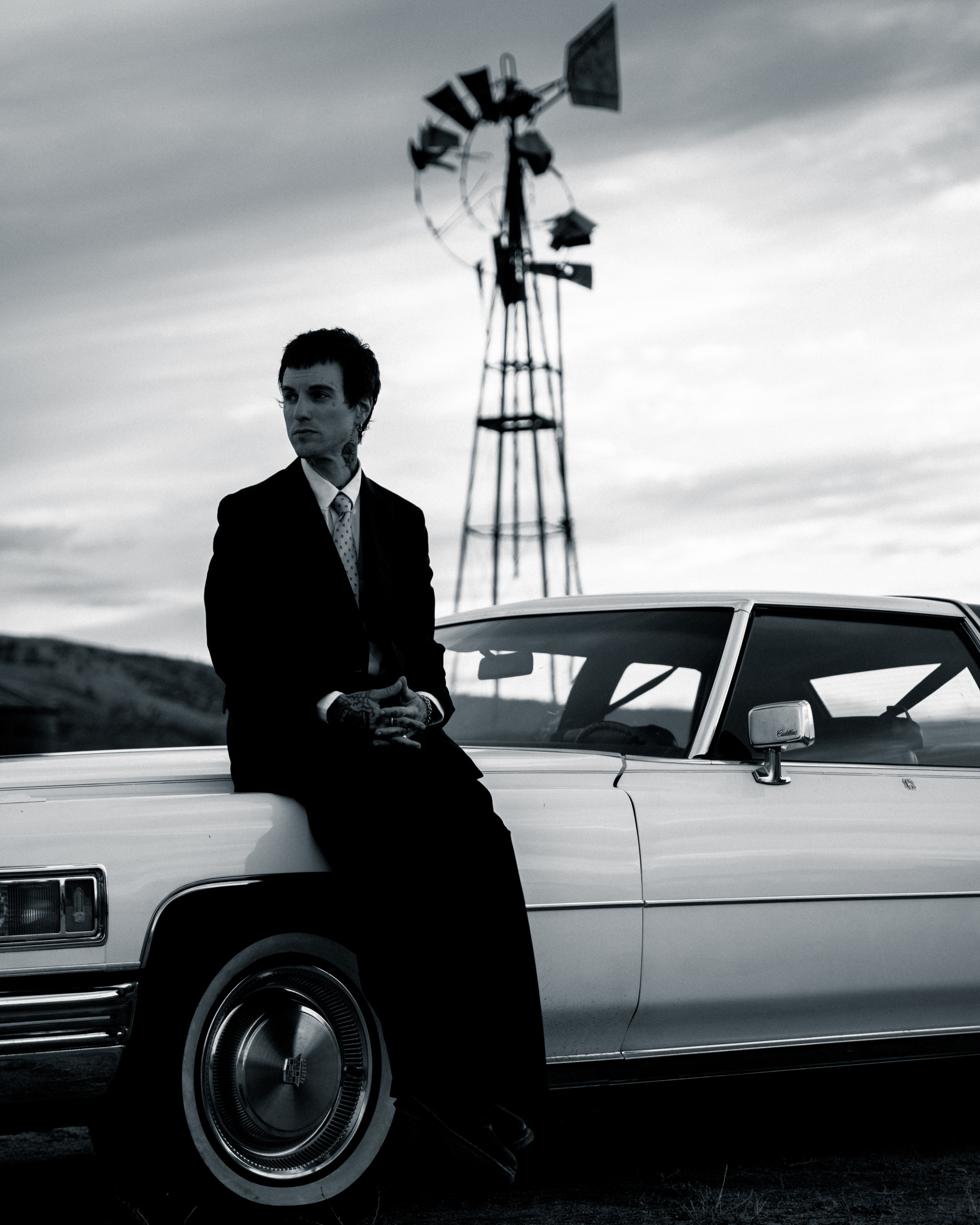
I went to film school, and I was into film before I ever started writing songs. That side of things has always come naturally to me. My filmmaking instincts used to be much better than my musical instincts, so when I first started, I was making music videos for songs that were honestly horrible. With this album, I was building a world sonically and thematically. There’s this idea of a simulation where you’re trapped, everything is ending, and you’re trying to get out. That reflects how I was feeling about the state of the world.
I wanted to build a loose story with a through line connecting all the videos, just as the album has its own through line. I met with Brendan, who directed all the videos, and Andrew, who creative-directed the rollout with me, before the album was even finished. We talked about this world and what it would look like. From the beginning, we wanted to tell this story.
Chin Up, Beautiful brings everything back to the beginning, so it’s almost the loop point. I wanted to make something that felt connected while allowing each piece to stand on its own. For the diehards who want to get lost in this world, I thought that would be cool. I’d never really done that before.
With “Sleepyhead,” I was caught up in the excitement of things taking off. I was putting singles out, had no money, and things escalated as I gained access to more resources. I was rolling with the punches as quickly as I could. With this album, I wanted to elevate things and really think about the world I was creating before throwing songs out.
You posted a clip of yourself singing “Take Care of Her” and spoke about how difficult it was to watch your grandfather lose your grandmother, his best friend. When you perform songs like that and see people singing those words back to you, knowing they connect with them on a deeply personal level, does that help you process those emotions, too?
I wasn’t going to perform that song live at all because I thought it would be torture. I didn’t want to put myself through that every night. When it came out, though, I should have known the fans would gravitate toward it. I didn’t anticipate that or really think about it, but everyone has lost somebody, and the song was helping a lot of people. I was getting so many messages about it.
At my shows, we have fun, we dance around, and there are the sexy songs and everything else. But it also feels like therapy, both for me and for a lot of the fans. There’s an emotional experience that happens at these shows, and it’s important. I knew I had to perform that song because some people needed to hear it.
Hearing people sing it and seeing people hold up pictures of the people they’ve lost on their phones is really emotional. It’s heavy, but it feels bigger than me at the shows. There’s a section toward the end of the set that gets pretty emotional, with a lot of the same themes running through several songs. It’s where we all get to cry it out. The Los Angeles show at The Wiltern was especially tough because my dad was there, and it was his mom who passed away. I knew, while singing the song, how emotional it probably was for him. Sometimes I have to close my eyes because I know I’ll cry if I think about it too much.
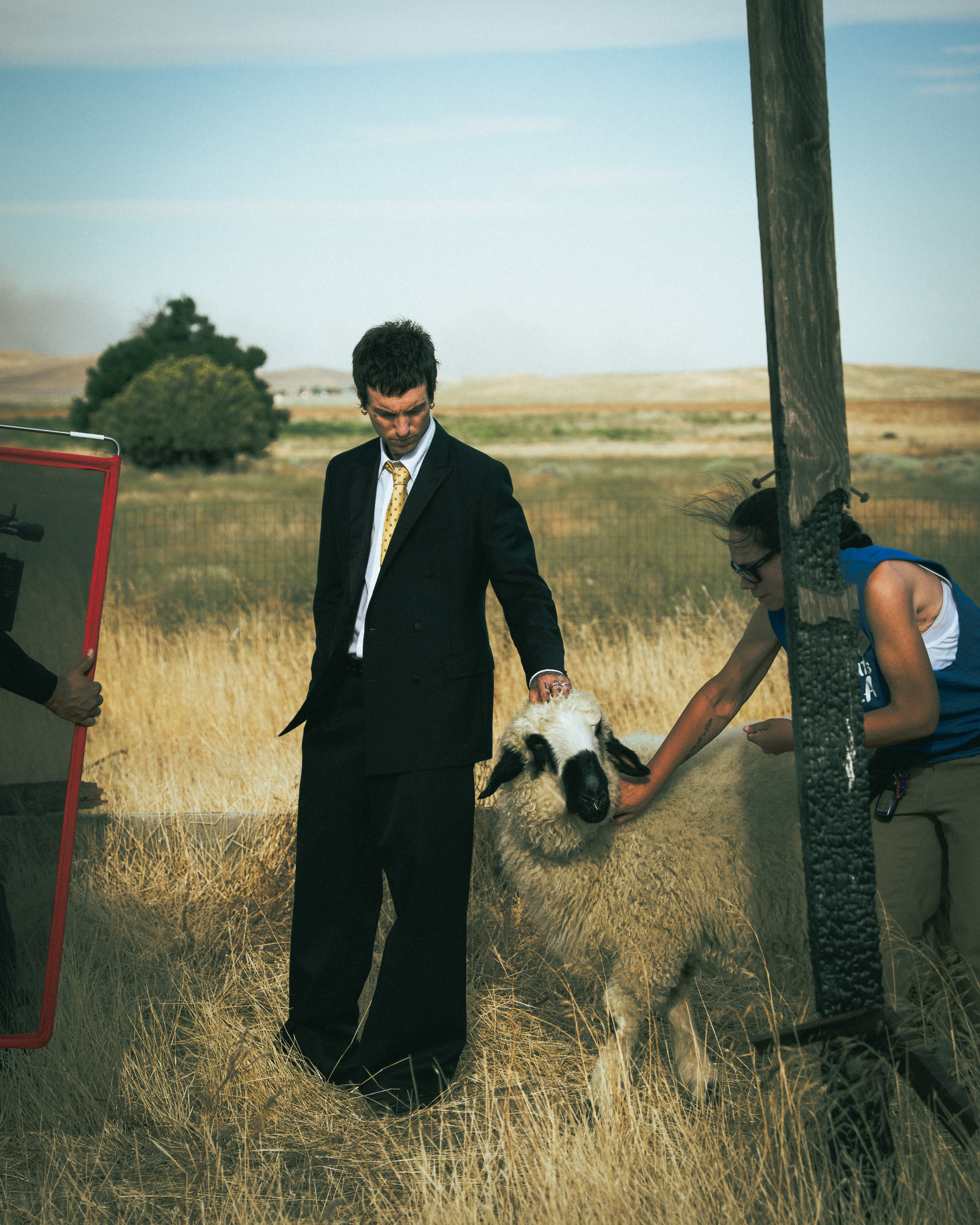
How has playing live changed the way you write or produce records? And how has it been to see people singing the words you’ve written back to you? Does it change your relationship with those songs?
The shows have become a place where people can have those emotional experiences together. Seeing how people connect with the songs and hearing them sing the words back to me reinforces why I make music in the first place. I want the music to help people, and those moments make it feel bigger than me.
If you could manifest something for yourself over the next year, what would it be?
Something I’ve wanted that hasn’t happened yet is having a song featured in a huge movie. My music is very cinematic and pairs well with intense, dramatic visuals. Of course, everyone who makes music wants a Grammy nomination or something like that, and that would be amazing. But because my music is so cinematic, it would be really cool to have one of my songs featured during a big, amazing moment in a movie. Having gone to film school and having wanted to make films at one point, it would feel full circle to have my music paired with something like that.