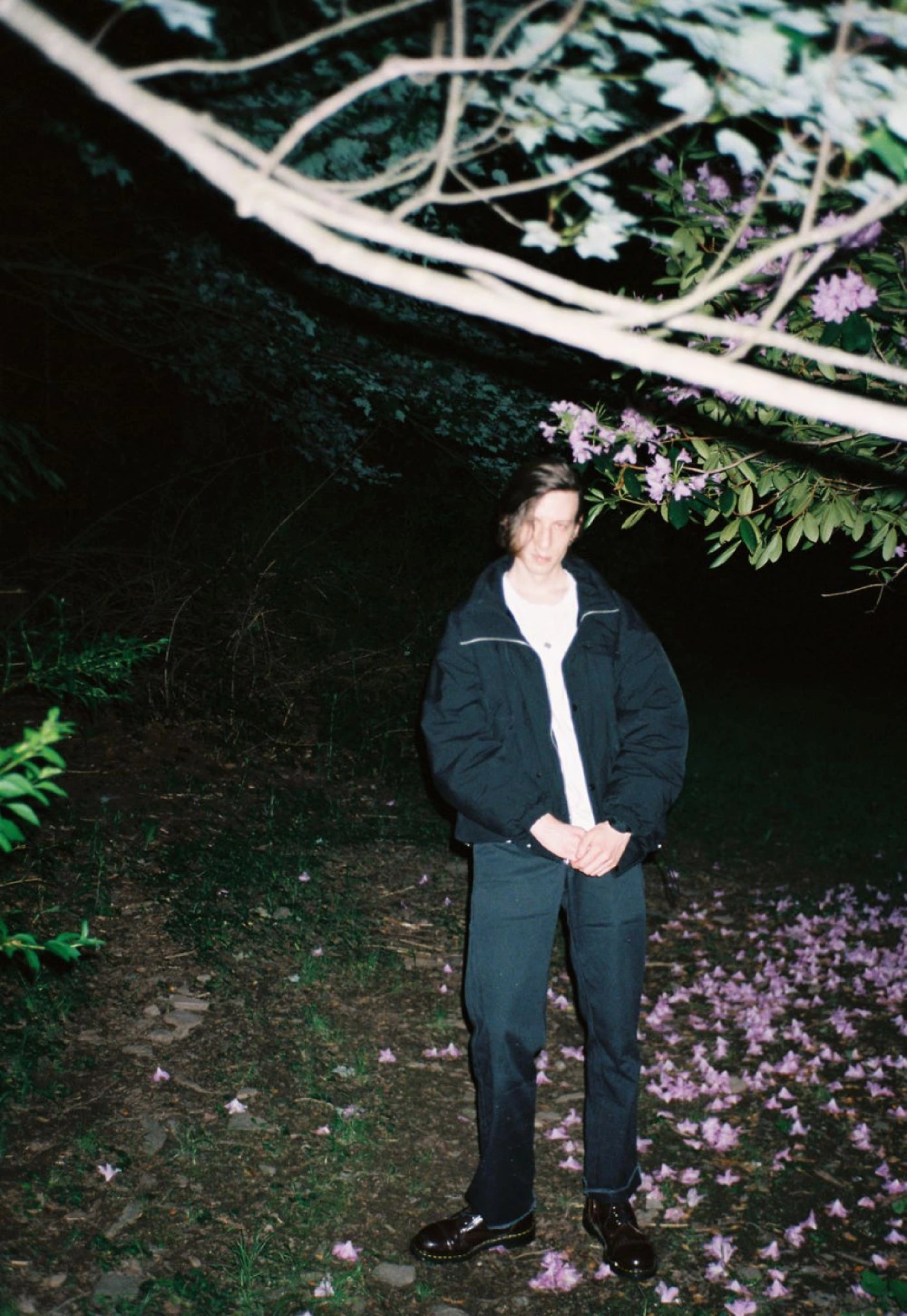
When Wicca Phase Springs Eternal (aka Adam Andrzejewski) returned with Mossy Oak Shadow earlier this year, it was a head turn. Recorded live with Uniform’s Ben Greenberg and a cast of session musicians, deemed the Mystery Mountain Band, the songs were no longer cloaked in layers of production but rather laid bare overtop spectral folk rock. Tracks like “Meet Me Anywhere,” featuring a duet with Ethel Cain, remain sparse and hopeful, whereas “Magic Moment” gleams with a childhood soundtracked by Bob Dylan, turning an impulse into an entire world. As he sings on the latter, an early favorite steeped in his magnetic baritone, “I heard its call, I took its hand.” It’s the picture of an artist forever in flux, realms away from the emo-dappled 808s and Title Fight samples that made his name in the late 2010s. No matter the style, Wicca has always ingrained his projects with cavernous imagination, sincerity, and an open mind. He’s unafraid to tread an unfamiliar path to make his own space, whether that’s as a member of GothBoiClique or Tigers Jaw.
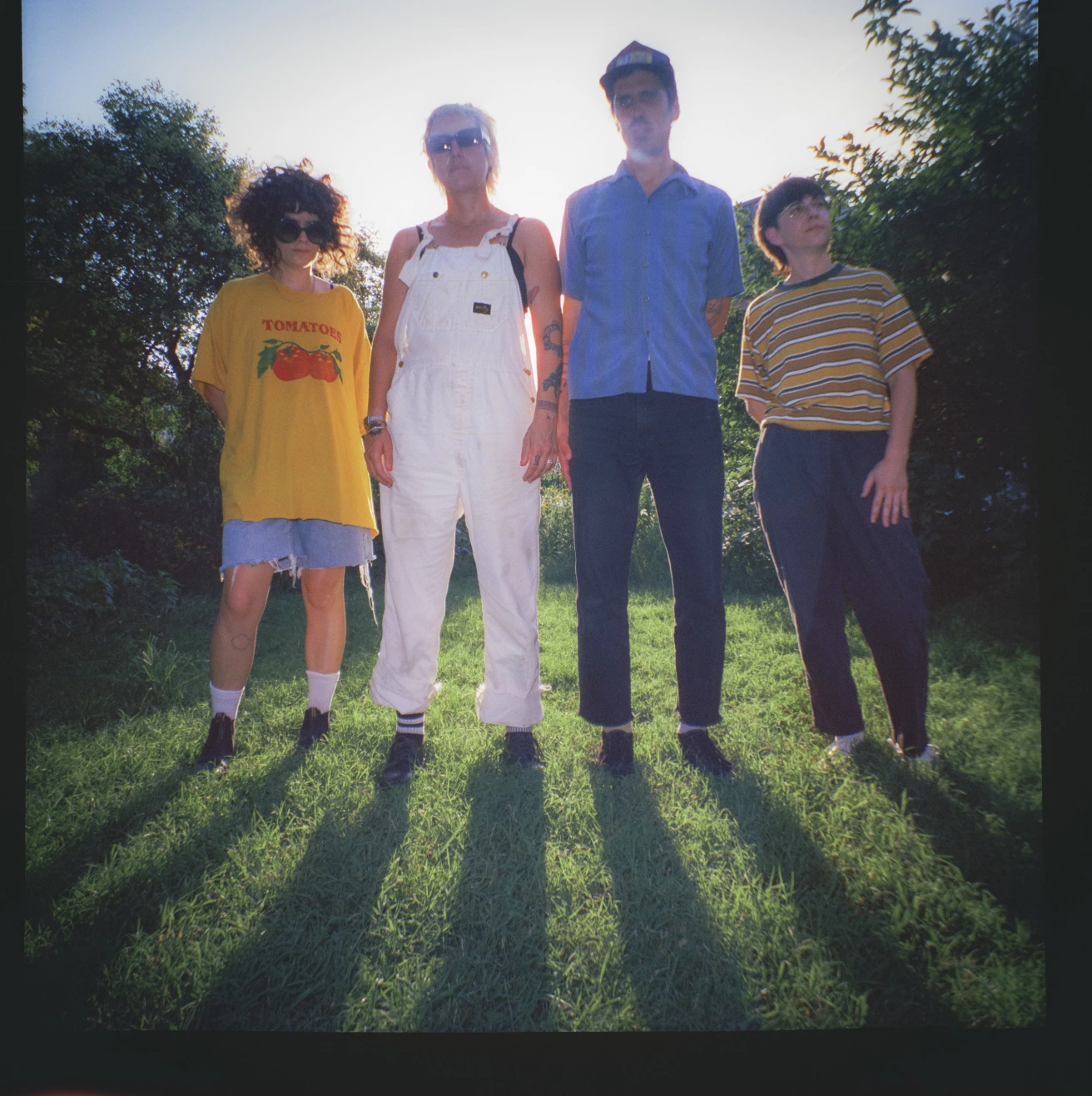
“It’s funny: I hear so many throughlines with Mossy Oak Shadow that connect earlier WPSE stuff with the music you made when you were young,” Russell Edling of Golden Apples tells him over text message, recognizing that a stripped-back approach and sturdy songcraft have always lived at the heart of his music. “It’s always exciting to hear you take your ideas to new places.” Likewise, Edling changed up his approach for the band’s fourth full-length, Shooting Star, recalibrating his writing process by inviting more collaborators into the fold — calling it “the bridge between a moment of need and relief from that need.” The result is fuzzy, off-kilter pop songs that tell stories of anxiety, freedom, and romance while pointing to a galaxy of references that depict his vibrant tastes.
Read more: The timeless wisdom of Vegyn
“We were just listening to a mixtape that Nate [Dionne] made on the drive, and it is so good,” Edling says when asked what he’s been digesting lately. “I recognized a few songs, one of which was “Trouble” by Lindsey Buckingham. I have to ask him what else is on it. Honestly, my favorite new music that I’ve heard lately is the Addison Rae album. I think it’s incredible. My dad got me a copy of Seductive Reasoning by Maggie and Terre Roche, and I really love it and have been listening a bunch. Mimi [Gallagher, my bandmate/partner] and I have also been enjoying Diamond Jubilee by Cindy Lee a lot. It’s perfect Saturday morning music.”
Given that Edling and Andrzejewski have sustained a long friendship, tapping each other for song reimaginings, album artwork, and sharing collaborators, culminating in a joint tour in the fall, we put the duo in conversation. The outcome speaks for itself, spawning a wide-ranging talk about their recent full-lengths, songwriting goals, and the magic of recording at The Bunk in Pennsylvania, where they’re both from.
Katrina Andrzejewski
ADAM ANDRZEJEWSKI: When you first started writing songs, how did you actually start a song?
RUSSELL EDLING: For me, it was more about the idea of starting a band. We were all talking about music and seeing bands and booking shows in our town in Northeastern PA, and eventually, we wanted to do the same thing. So for me, songwriting started as a totally collaborative process, where mostly none of us knew how to even play our instruments that well. The idea of being a “songwriter” didn’t really occur to me for a few years after being in a band and actually developing some sort of sensibility. I feel like, to some extent, the fact that I never started out necessarily intending to write songs has helped me not feel super dependent on a specific instrument now that I am mostly thinking of my process as songwriting
ANDRZEJEWSKI: So when that first band is just starting, are you just writing music parts together and piecing them along as you go?
EDLING: Definitely, just like endless riffs. This was in high school/middle school, and I didn’t really know what I was doing at all. This is why some of the first songs the band I was in wrote at the time were six minutes long. [Laughs.] I feel like one of the first things I could discern from your music when I heard it back then — definitely on MySpace — was like, “Wow, these are songs.” I think it was “Cannonball.”
ANDRZEJEWSKI: I feel like they weren’t even songs! Although I think early Tigers Jaw songs were the first original songs I wrote from scratch, compared to my earliest songs, which were just direct copies of other songs. Not in the sense that I was plagiarizing them, but I would just pick songs I liked, figure out the structure of them, and then write a new song with new chords based on that original song.
EDLING: Oh, that is cool! Just like lessons in composition and stuff. Do you remember what some of the first songs you chose to dissect like that were?
ANDRZEJEWSKI: Yes! The first song I ever wrote was pretty much a 1:1 of the Distillers’ “I Am a Revenant,” but with the palm-muted verse replaced with a ska part. The chord structure was almost the song, too, just with an extra chord thrown in. When do you think you were able to start figuring out how to write songs with more intent? How old were you?
EDLING: That is so sick about the Distillers influence. It is funny to imagine you in your ska era, but I know that was a thing. You guys had a band called Kosmos, right? I could also be totally wrong.
ANDRZEJEWSKI: That was it.
EDLING: Never got to see y’all. I think we started hanging just after that time period. But to answer your question, I honestly don’t even know when I have been able to write songs with intent. I feel like they’ve always just had their way with me without me really being able to control much, or at least it feels like that.
I was probably 16 when I arrived at something that felt like a song. I remember I got this Hammond organ from the classified ads in the paper, and it had a kind of arpeggiator function, and I was tinkering with that and my guitar and recorded this song on my computer. I had a microphone that looked like a white pencil or something — it came with the computer we had. I used a program called Cool Edit Pro. So I feel like I always wrote and recorded sort of at the same time. Maybe so I had something to play along with, some sort of proxy band. Did you make demos of stuff? How and when did you start getting songs down?
ANDRZEJEWSKI: Yes! I had a digital Fostex recorder that Tigers Jaw recorded early songs on, and I would use that for demos. So I was like 16-17. Now I have multiple demos of everything I do, usually recorded at home in Ableton, either vocal demos over beats I made or programmed instruments for full band songs. Early Wicca Phase songs were definitely not demoed. Was Cool Edit Pro free?
EDLING: Yeah, pretty sure cool edit was free. It had this reverb plugin called “cathedral reverb,” and I’d put that on everything. I guess it was just fun to mess around. Do you start with a beat? Do you have a process for putting a song together? Where does the kernel of the song start?
ANDRZEJEWSKI: Ideally, it starts with a song title. If I can think of a good one, the rest of the song just falls into place. If not, it’s usually with a chord progression, and the structure of the song will be dictated by the lyrics. What about you?
EDLING: Wow, that’s amazing. For me, the song title is pretty much always the last thing that happens, and I unceremoniously slap it on at the end. I should try starting with a title. Your lyrics are often so fragmented, and they jump from vague sentiments to these hyperspecific images, like transitioning instantly from a gravel road to the sky above. Can you talk about the ways you juxtapose ideas in your lyrics? It’s something I’ve always admired.
ANDRZEJEWSKI: Oh, thank you! I think a lot of it comes from trying to ground the lyrics. Sometimes I’ll come up with a few crazy lines that sound nice, and I know what they mean, but I don’t know if that meaning would necessarily come across if I kept going, so I try to write a few lines to bring the song back down to earth. Unrelated, but I’m going to assume that sometimes you’ll hear a song and think, “I want to write a song just like that.” Obviously, you can’t just copy that song, so what do you do?
EDLING: Yeah, that does happen a lot. When I get that feeling, I usually just trust that the energy of the song I love will pop up sometime later, like I need to forget about it in order for the inspiration to reappear in a way that feels natural. I don’t know if that makes sense. It’s funny because when I listen to my songs, I feel like my influences are so apparent, but not so much when I listen to yours. Do you feel like your influences come through at all? In what ways do you think they show up?
ANDRZEJEWSKI: I think I’ve learned to listen to music that is so far removed from what I’m doing to avoid those influences showing up too much. This usually creates a problem where I’m only listening to very old music, and I get disconnected from what’s happening in new music, but sometimes I’ll go back and listen to old Tigers Jaw songs — like old Tigers Jaw songs — and see that the rip-offs were so obvious. Pat [Brier] showed me a song we recorded the first time he played drums for us, and I remembered it wasn’t released because it sounded too much like a Tiger Army song I was obsessed with at the time.
EDLING: That’s cool. What is some older stuff that you’ve been getting into? I go through periods where I feel like I don’t even listen to that much music, especially when I’m in a groove with writing. I just get pretty focused.
ANDRZEJEWSKI: Nate Dionne showed me Stan Rogers, and I’m obsessed. Then it’s the usuals — Neil Young, Fairport Convention, Dylan. What have you been listening to? New or old.
EDLING: It’s funny: We were just listening to a mixtape that Nate made on the drive, and it is so good. I recognized a few songs, one of which was “Trouble” by Lindsey Buckingham. I have to ask him what else is on it. Honestly, my favorite new music that I’ve heard lately is the Addison Rae album. I think it’s incredible. My dad got me a copy of Seductive Reasoning by Maggie and Terre Roche, and I really love it and have been listening a bunch. Mimi [Gallagher] and I have also been enjoying Diamond Jubilee by Cindy Lee a lot. It’s perfect Saturday morning music.
Bob Sweeney
ANDRZEJEWSKI: OK, I will listen to these tomorrow on the flight. What time of day do you usually write?
EDLING: I don’t really have a set schedule, but I feel like the ideas come more freely early in the morning before my “critical voice” is awake. I remember reading that Richard David James [Aphex Twin] would sleep in the middle of all the recording gear and whatnot so he could wake up and immediately start playing and working. I’ve always thought that was an interesting idea. Sometimes things don’t start clicking for me until I’ve already been wrestling with the idea for a bit, and sometimes they come fully formed. It’s still a mystery for me, and I think I’m grateful for that. Do you have a system or an approach that you get into when you’re writing? Are you able to have a routine with it?
ANDRZEJEWSKI: I typically start writing in the afternoon, just because of how my days are structured. Then I’ll try to finish whatever idea I was working on — whether it’s a verse, chorus, or specific instrumental part — at night. Sometimes I’m able to just steamroll through writing, but that happens rarely.
EDLING: Has your writing process shifted at all with this new album?
ANDRZEJEWSKI: No, not really! Maybe more guitar playing, but I think doing something in a different genre, ick, was enough to help make it feel different. What about with you?
EDLING: For me, I think the writing process was fairly consistent with how I usually operate, but the execution was different. For a lot of these songs, I maintained elements from my demos in ways that I usually don’t. But at the same time, I recorded the rest of the instrumentation with all different players in all different spaces, so in a way, it was a lot of new and a good amount of tried and true.
ANDRZEJEWSKI: Did that create any problems with making the record cohesive at all? Or was that not really a concern?
EDLING: Well, I was concerned about it, for sure, but luckily Matt Schimelfenig is a master of the craft, and they brought everything together amazingly well. I think the differences and variations that exist are complementary, and it feels like a contained world. But definitely wasn’t sure how it was going to all come together.
ANDRZEJEWSKI: Matt is a master of the craft.
EDLING: I love those live sessions y’all did with them at The Bunk. What was the impetus behind that?
ANDRZEJEWSKI: The label’s desire for video content. But it also served as a good practice! I like going to The Bunk and content farming, so I took a bunch of pictures and shot the “Magic Moment” video that weekend as well. What do you think the objectively best song on your album is? And what’s your favorite?
EDLING: Oh, that’s great. It’s such a magical place. We’ve mixed pretty much all of our records there and recorded some there as well, and I always love just posting up for a while and getting in the zone.
That’s a tricky one! I don’t know if I can look at them objectively, to be honest. It’s so hard for me to qualify what makes a good song. I guess maybe lyrically, I think “Breeze” might be the strongest song? My personal favorite is “Freeeee” because I had so much fun doing weird stuff with it. I recorded my voice and sampled it to build the main keyboard parts in the verses and then built the choruses around that. I also set a room mic up and cranked the signal while playing an unplugged electric guitar for the guitar in the verses. Just had a lot of fun building that one, and I am proud of how it came out.
I wanna know what you think the best song on your record is, but I’m also curious if you had one you really struggled with and how you resolved it?
ANDRZEJEWSKI: That’s a great question. I had a terrible time recording “Rough Roads” because the song is so quiet, and we were tracking it live, so any mistakes are super noticeable. I think we ended up just using the take that felt the loosest. And it opens the album! So I guess it got resolved. Oh, and I think from playing these shows live for a week that the best song is probably “Horseback” or “Meet Me Anywhere,” but my favorite is either “I Just Moved Here” or “Magic Moment.”
Because you recorded your album in a bunch of places, were you just writing and recording over time, and then when you had enough songs decided to put out the album? Or did you write everything first?
EDLING: I demoed out the whole record first and then planned out where to track the album versions, so I had an idea of what vibe the songs might get depending on where we did the tracking.
ANDRZEJEWSKI: That’s a cool way of doing it. Normally, I’ll write about 10 songs, book time to record them, then try to write as many more as I can in that time.
OK, let’s wrap this up. Do you have any big songwriting goals? People you want to work with, people you’d like to write for, etc.
EDLING: Nice, so you kind of give yourself a deadline and then see if you can get a few more ideas out. I definitely live by deadlines generally.
One thing I wanna do is eliminate the demo phase. Maybe that means the demo is the final product, or maybe it means I write more spontaneously in the studio. I want to reduce the filter between idea and result, if that makes sense. I would love to work with a producer sometime. I’ve never done that because we’ve never had those resources, but also, I’m a control freak. I’ve always wanted to work with Rob Schneider.
It was really cool to do the Bananasugarfire remix record last year. I love the remix you did on that. Other than that, I just wanna keep on keepin’ on. What about you? Is there anything you’re excited about in the future that you wanna try out? Are there elements you want to explore more in the direction of the new record?
ANDRZEJEWSKI: Oh, you have a lot you want to do! Well, I’d love to start writing for other people. I’d also love for lyrics to come to me more automatically, and from what I’ve been reading, it seems like meditation can help with that — lowering intellect, heightening intuition — so I have started meditating. We’ll see how that works out. I’d also like to get better at the production side of things, so as I’m writing and demoing, I’m also working on that.
EDLING: That’s great. Are you interested in TM? I’ve dabbled in mindfulness meditation over the years, mostly just for anxiety stuff. David Lynch made some pretty compelling arguments for transcendental meditation, though…
ANDRZEJEWSKI: I am interested in it, mainly because of Lynch. I’ve just been using the Insight Timer app for guided meditation.
EDLING: That’s awesome. [I’m] just really grateful to chat with you and to have been able to be inspired by your songwriting for so long. Thank you.
ANDRZEJEWSKI: Likewise! I feel like this is the most we’ve chatted in years.