

At this point, what is there left to say about Elden Ring? FromSoftware has rightly become one of the most influential developers in the industry after its pioneering of the Soulslike genre, and Elden Ring is arguably its finest contribution yet. It’s won countless awards and been lauded as one of the best games ever made, and all that praise still rings true a few years after the original release.
Yet while we wait for the studio’s next major project in the PvP focused Switch 2 exclusive The Duskbloods, the decision was made to first remind the Nintendo audience of its pedigree with the bespoke Elden Ring: Tarnished Edition.
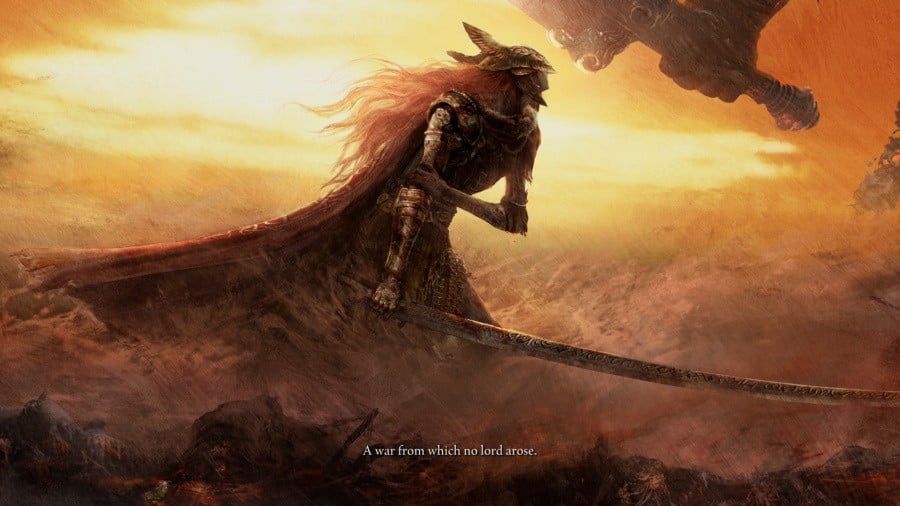
Bundling Elden Ring and its major expansion Shadow of the Erdtree together into a neat portable package, this new port showcases that the Switch 2 is comfortably capable of handling this generation-defining game. And of course, it goes without saying that it’s easily worth your time and money, especially if you haven’t picked it up on another platform yet.
The narrative in Elden Ring is its weakest but most intriguing aspect, offering you a vague and often confusing story that’s rarely delivered to you directly. The gist of it is that the eponymous Elden Ring was destroyed and its various fragments were then fought over by an increasingly aggressive group of demigods and royals who all sought power for their own agendas, leaving The Lands Between broken and ruined.
You then come in as a nameless Tarnished, a revived warrior who was once banished from The Lands Between and is now called back by a divine presence to gather the remaining shards of the ring and become the next Elden Lord.
Those of you hoping for a gripping, character-driven narrative won’t find much of one here, as the story is mostly told to you in fractured bits of random NPC dialogue and item descriptions. That said, it’s cool to uncover bits of lore and make connections between various events and characters yourself as gaps are slowly filled in.
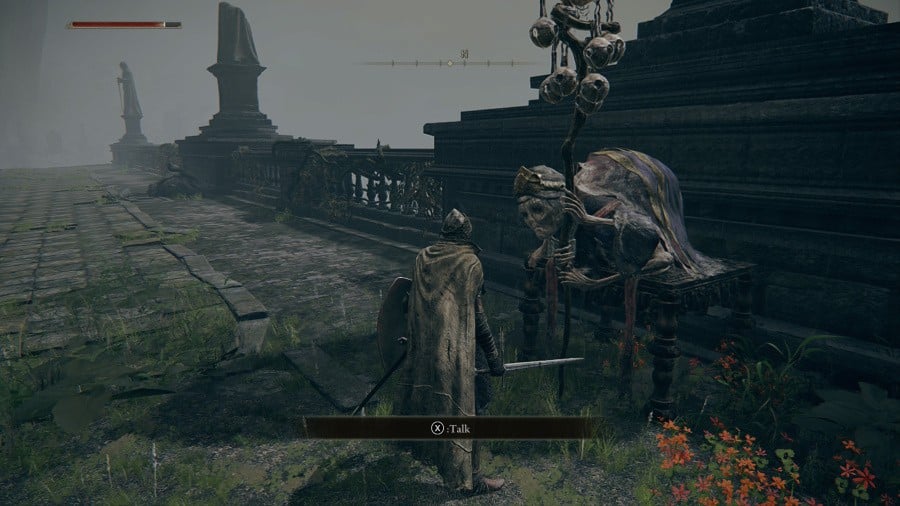
Despite its ephemeral nature, this kind of storytelling does feel like it fits the gameplay very well; there’s no telling exactly in what order you’ll tackle various bits of game content, so the story is similarly fractured and uncovered just like locales and secrets are.
Gameplay in Elden Ring follows a true and passionate commitment to open-world design. After the initial, vague cutscene giving you some idea of the story, you get dumped into the enormous world and left to figure out the rest for yourself. ‘Sites of Grace’ checkpoints scattered about the land sometimes offer some hints as to the direction you ‘should’ be going, but there are almost no limits on where you can travel or what you can choose to do next beyond those you impose upon yourself.
At first, this makes the world amusingly terrifying, as you find yourself accosted at nearly every turn by unimaginable monsters, boss fights way above your level, and absolutely no clue as to where you’re supposed to go next. Yet this initial confusion is an intended part of the experience, and part of the joy of the open world is that you always have multiple paths you can take to make further progress.
By the time you first stumble upon Margit, the Fell Omen — the first major boss encounter — you’re likely nowhere near ready for the challenge of his fight, but this simply encourages you to hop atop Torrent (your highland cow/horse thing) and ride off to another part of the map for something that feels somewhat more fair. In so doing, you not only get the opportunity to level up and upgrade the efficacy of your gear, but you find more weapons and tools that build out your kit more effectively and ensure the rematch against him will have more even odds.
In this way, Elden Ring is certainly the most approachable Soulslike game – the word ‘easiest’ feels wrong to use. There’s almost always somewhere else you can explore, someone else you can fight, something else you can scavenge, that helps to maintain this thrilling sense of forward progress no matter what you come across.
Overworld exploration follows more in the footsteps of something like Breath of the Wild where your next destination is typically dictated by simply finding something on the horizon that looks interesting and going to see what it’s about. Sometimes it pans out to be nothing more than visually interesting ruins, other times it’s an entire new dungeon that goes way deeper than you would’ve expected it to at first glance.
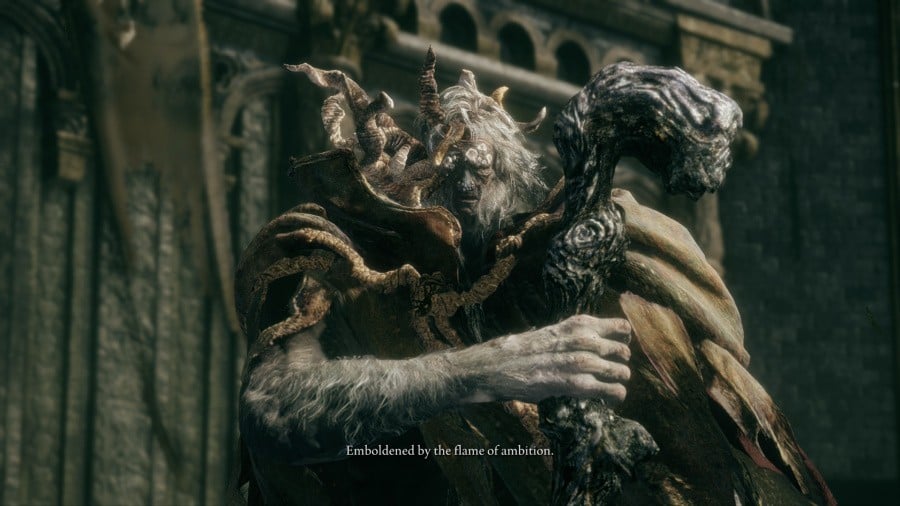
This leads to a world that feels alive and thrilling despite its grim and dim aesthetic. It’s very dense with varied activities, locales, and NPCs with quest lines to uncover—most of which are entirely optional and missable unless you happen to stumble upon them.
My personal favourite thing to come across were the various mini-dungeons scattered about The Lands Between, acting a bit like bite-sized ‘shrines’ that offer a fun challenge and rewarding treasures without being too distracting. If you don’t find the entrance yourself naturally, there’s usually a more obvious statue on a hill somewhere nearby that points to it.
Once you get inside, it plays out a bit like a Chalice Dungeon in Bloodborne, offering a relatively brief and compact 30-minute adventure in which you navigate mazelike rooms, get repeatedly ganked by enemies hiding in the walls and corners, and wrap it all up with a simple boss encounter at the end that grants you something like a new spell or weapon attachment if you can beat it.
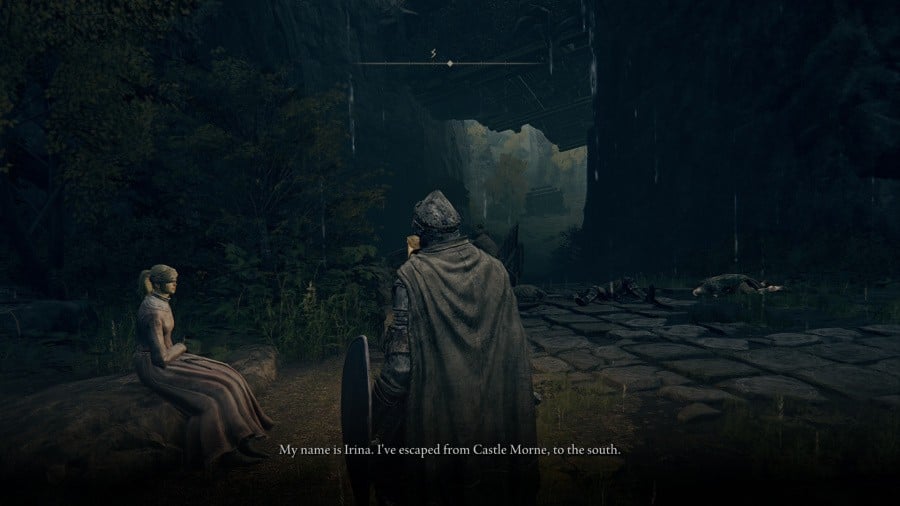
Then at the main junction points of the map and story, you have the Legacy Dungeons, which function like the good old fashioned Souls levels you’ve always known and loved. These expansive dungeons offer much more intricate layouts and more memorable aesthetics, packed to the brim with unfair enemy placements, tons of collectibles, and a brutal boss at the end who you’re likely to get hung up on for a good hour or so if you decide to stick things out to learn their patterns and tells.
Though the Legacy Dungeons aren’t nearly as common as some die-hard fans of the traditional Soulslike formula may prefer, I thought that there were more than enough here to provide a dense volume of traditional Souls content and to keep the open world from feeling too sparse and devoid of meaningful discoveries.
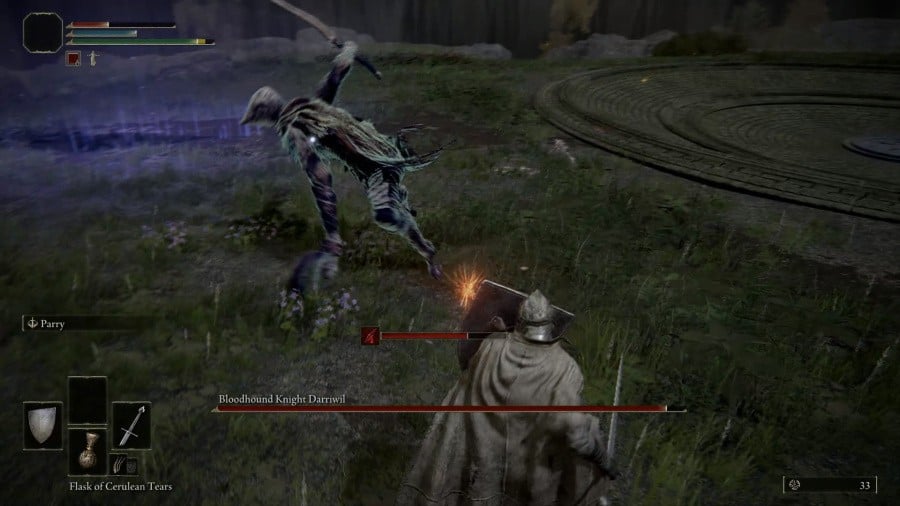
As you’d expect, boss fights are the star of the show here, playing host to some of the biggest and most memorable set-piece moments this adventure has to offer. While most of the bosses are in the classic FromSoft lineage of offering incredibly tough, but fair encounters that test the limits of your build, weapons, and ability to learn and read tells, there are additional boss fights here that bring a whole new dimension to the encounter design that so many have come to know and love.
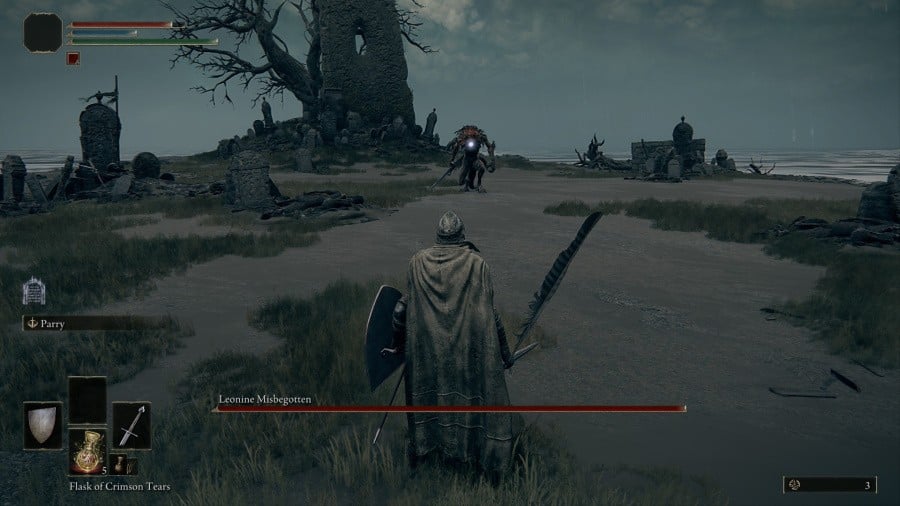
With the introduction of the open world, there are now whole spectacular boss fights that take place right there out on the field, and can be just as easy to stumble across as a Site of Grace.
The difference here is that you have Torrent available to you for these fights, and having a steed that you can call and dismiss at will changes the dynamics of battles in a meaningful way. Not only are some of the attacks and timings of the fights clearly built around the expectation that you’ll utilise Torrent mid-battle, but simply having this additional tool available to you changes the way that you approach the usual cycle of pressing the attack and playing defensively.
Plus, these overworld fights grant you another option that many have likely wanted to use often in past Souls games: running away. I’ll never forget how woefully underprepared I was for my first surprise encounter with an Erdtree Avatar, but the fact that it didn’t entrap me in a fog meant that I could run for my life as soon as I saw how pitifully my weapon removed a sliver of its health. The memory of this terror stuck with me, which made it that much more rewarding when I returned later, more prepared and ready to do battle on even ground.
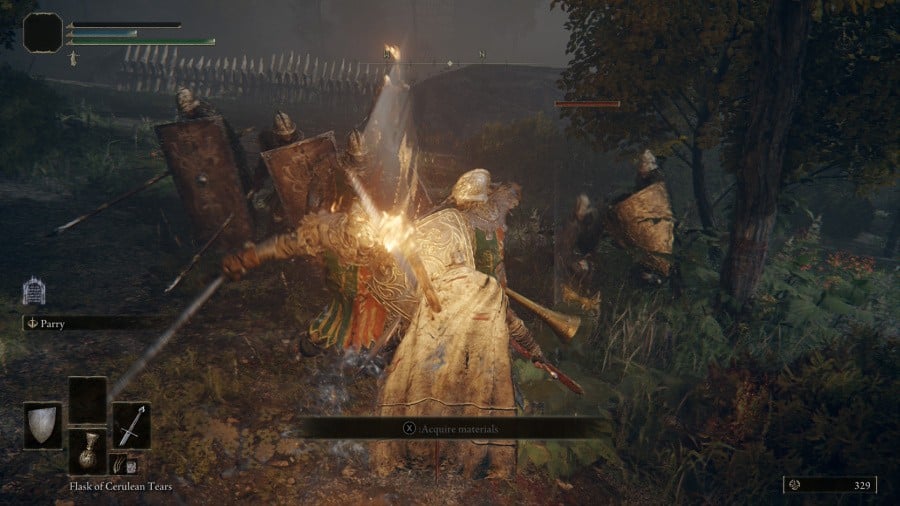
Character building still follows the same tried and true system that fans are well-acquainted with by now—using runes gathered from killing enemies (without getting killed yourself and spilling them) you can incrementally invest individual points into different stats to gradually grow your character and carve out a build for them.
Alongside this, you can collect better equipment or use resources to improve existing equipment to give you a bit more of an edge in fights. So far, so similar, but Elden Ring takes the equipment modification aspect a bit further.
Now, you can utilise various Ashes of War you collect over your journey to modify your weapon of choice to scale off of different stats and to use a different skill. This may seem like a relatively small change, but it means that you now have more granular control over the state of your arsenal. This gives you that much more agency to experiment with different builds, trying out different Ashes and reinvigorating weapons with different play styles that meaningfully change the way you use them in fights.
This is the kind of iteration that’s really nice to see; the team at FromSoftware knows it has a winning formula with it character progression, so they focused more on iterative, incremental improvement on a system that’s been built up over several games now.
Elden Ring itself will take you anywhere from 60 to well over 100 hours to beat depending on your skill and meticulousness, but the Tarnished Edition also includes the award-winning Shadow of the Erdtree DLC, which honestly is the size of a separate game all on its own. Once unlocked, this 20-to-50-hour journey takes you to the creepy Realm of Shadow to chase after a demigod whose subplot isn’t fully wrapped in the base game.
In this separate and more vertically designed map, the same gameplay loop present in the base game plays out, but the difficulty feels like it’s been ratcheted up another notch. To help you meet it, there’s not only a supplementary levelling system present in Scadutree Fragments, but there are new weapons and weapon types to get to grips with.
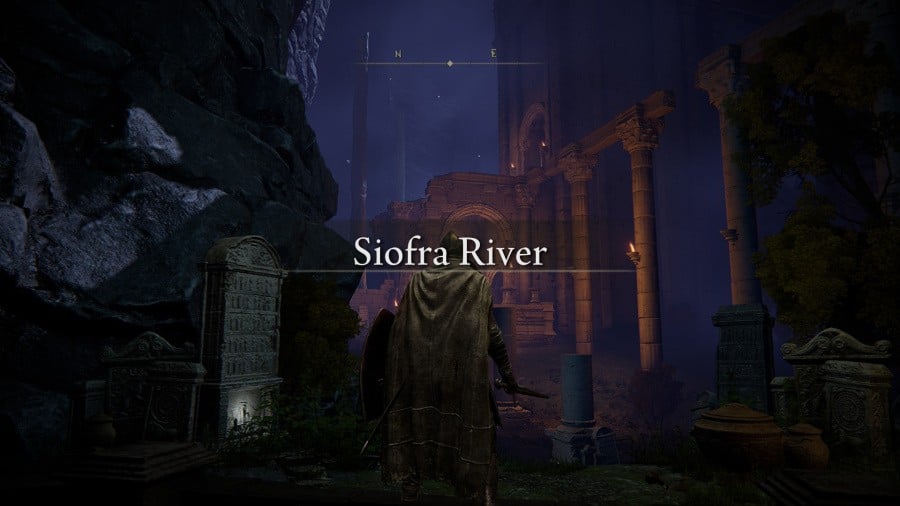
Shadow of the Erdtree thus functions as incredible endgame content that perfectly builds out an already excellent game—giving you a whole explorable world and additional fights to conquer with your high-level character and put them through their paces.
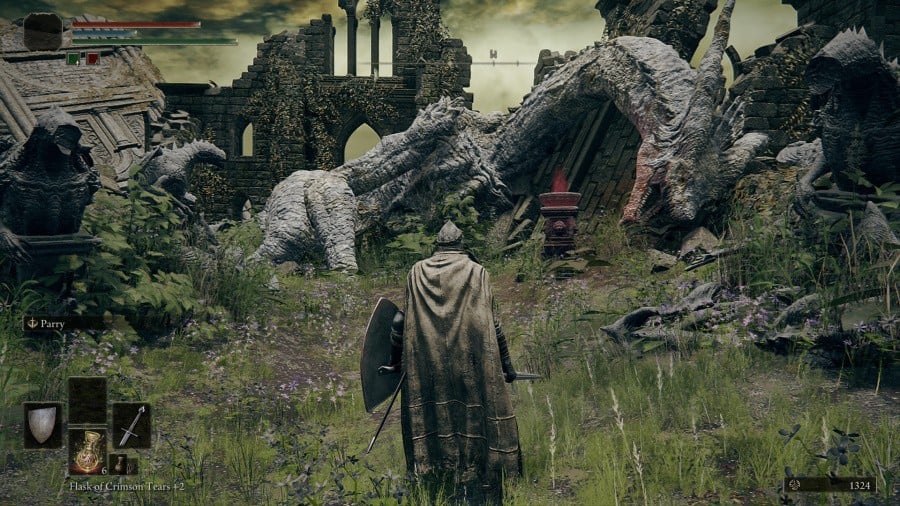
As far as visuals go, the grim and melancholy world of The Lands Between wows with its ‘dark fairytale’ aesthetics, including crumbling castles, expansive vistas, and horrifically disfigured citizens. It’s not a particularly colourful game, but it still has a unique capacity to wow you with its spectacle, with my favourite instance being an unassuming elevator in the overworld taking me down to a huge underground area with constellations and a hazy fog making it look as if the ceiling of the cave has been replaced with the night sky.
Regarding performance, those who were concerned over the chatter of the unstable early build of the port can rest easy; following its delay from 2025, Elden Ring runs very well on the Switch 2. In both docked and handheld, the frame rate target is 30fps and it holds to this very well, with only occasional minor drops when out in the overworld or dealing with massive bosses that are chasing you across it.
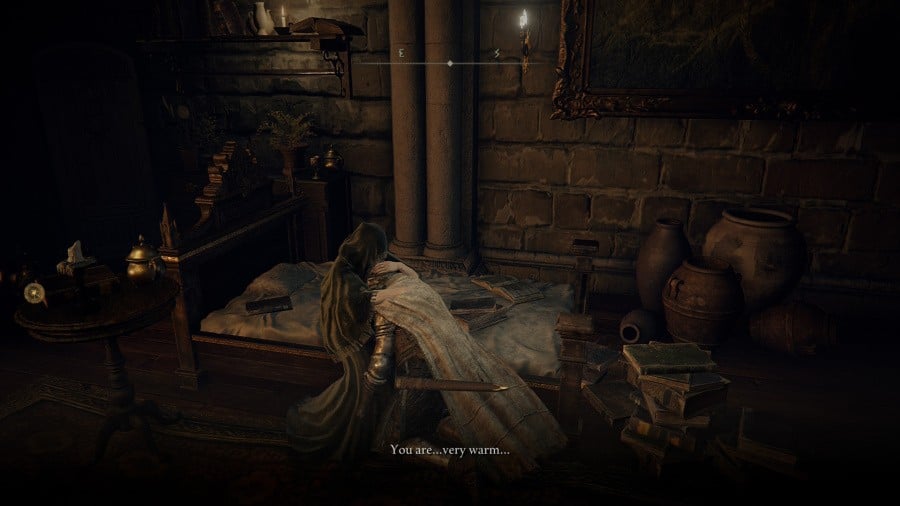
Though mildly disappointing, these frame drops don’t have a meaningful effect on gameplay and certainly aren’t to blame for getting murked yet again by Agheel. Meanwhile, everything seems to be running at either 1080p or very close to it, resulting in a crisp image that looks great in motion. Obviously, the Switch 2 version will have compromises compared to the strongest hardware that can run this game, but I’d say it’s the best bespoke handheld version available.