Posted in: Comics, Interview, Lucca Comics & Games | Tagged: marko djurdjevic, Orken, SIXMOREVODKA
Ahead of his upcoming appearance at Lucca Comics & Games 2026, artist Marko Djurdjević chatted with us about his upcoming series Orken.
Article Summary
- Marko Djurdjević reveals why Orken took nine years, balancing the dark fantasy series with major game and comics work.
- Djurdjević explains how Orken began in 2001, aiming for mature fantasy centered on first contact and the human condition.
- Marko Djurdjević says self-publishing Orken was key to preserving creative control, authenticity, and the project’s vision.
- Ahead of Lucca Comics & Games 2026, Djurdjević previews Orken’s debut, Wave 1 launch, and bigger Wave 2 plans.
A short time ago, Marko Djurdjević announced that he would be debuting his new dark fantasy series Orken at Lucca Comics & Games 2026, the same place he originally announced the series back in 2017, serving as a bit of a full-circle moment. Djurdjević has been working on the series for nine years while also producing other comic book and video game work through his studio, SIXMOREVODKA. But Orken has been at the forefront of his creative thought, and after a successful Kickstarter campaign, he’s ready to unveil his latest works to attendees at the annual Italian convention. Ahead of that, we got a chance to sit down and chat with him about the series and his work on it before his arrival in Lucca, Italy, from October 28 until November 1.
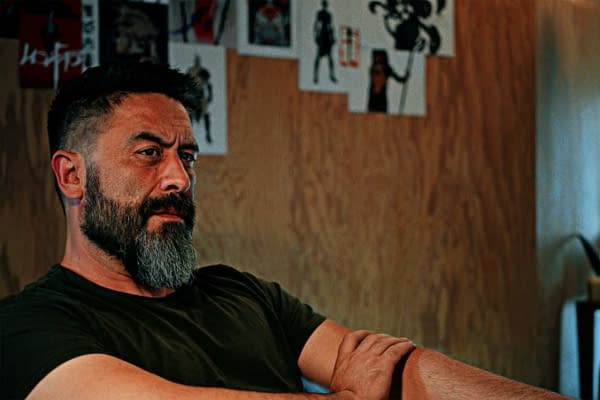
BC: So take us back to 2017. You’re at Lucca Comics & Games. What’s going through your mind in announcing this brand-new project at the time?
MD: I mean, in my mind, I was going to be done in a year and able to put it out. But, like, you know, life is always crazy. I had a bunch of other contracts and jobs coming in and stuff that kept me from actually being able to fully commit to this. And it dragged on for another seven years until I could finally start putting the time down to actually really work on this and bring it to a finish.
What were you working on in the meantime? Because I don’t think a lot of people realize that when you’re a freelance artist, there’s always work coming in while you’re trying to do your own projects. So kind of what was all happening in the time while you were trying to work on your own stuff?
SIXMOREVODKA has been doing art for games for the past 16 years. We worked on a bunch of League of Legends stuff for Riot Games; we were seven years exclusively working with Riot. We did all of the artwork for Legends of Runeterra for them, helped them out with League of Legends, and the early stages of Arcane. We did Warner Brothers, Batman: Arkham Origins and Batman: Arkham Knight. Helped out Guerrilla Games with Horizon. There’s a million other projects that we serviced that needed attention and that, you know, kind of took me away from my creative work.
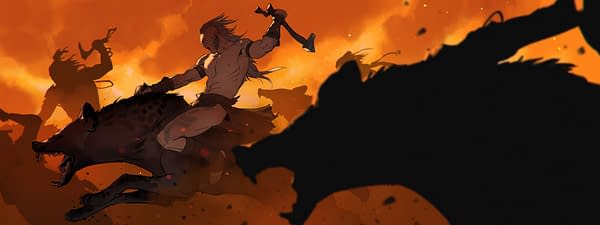
So how did gem for Orken come about? What was the kind of inspiration that started the spark and led to creating this whole world?
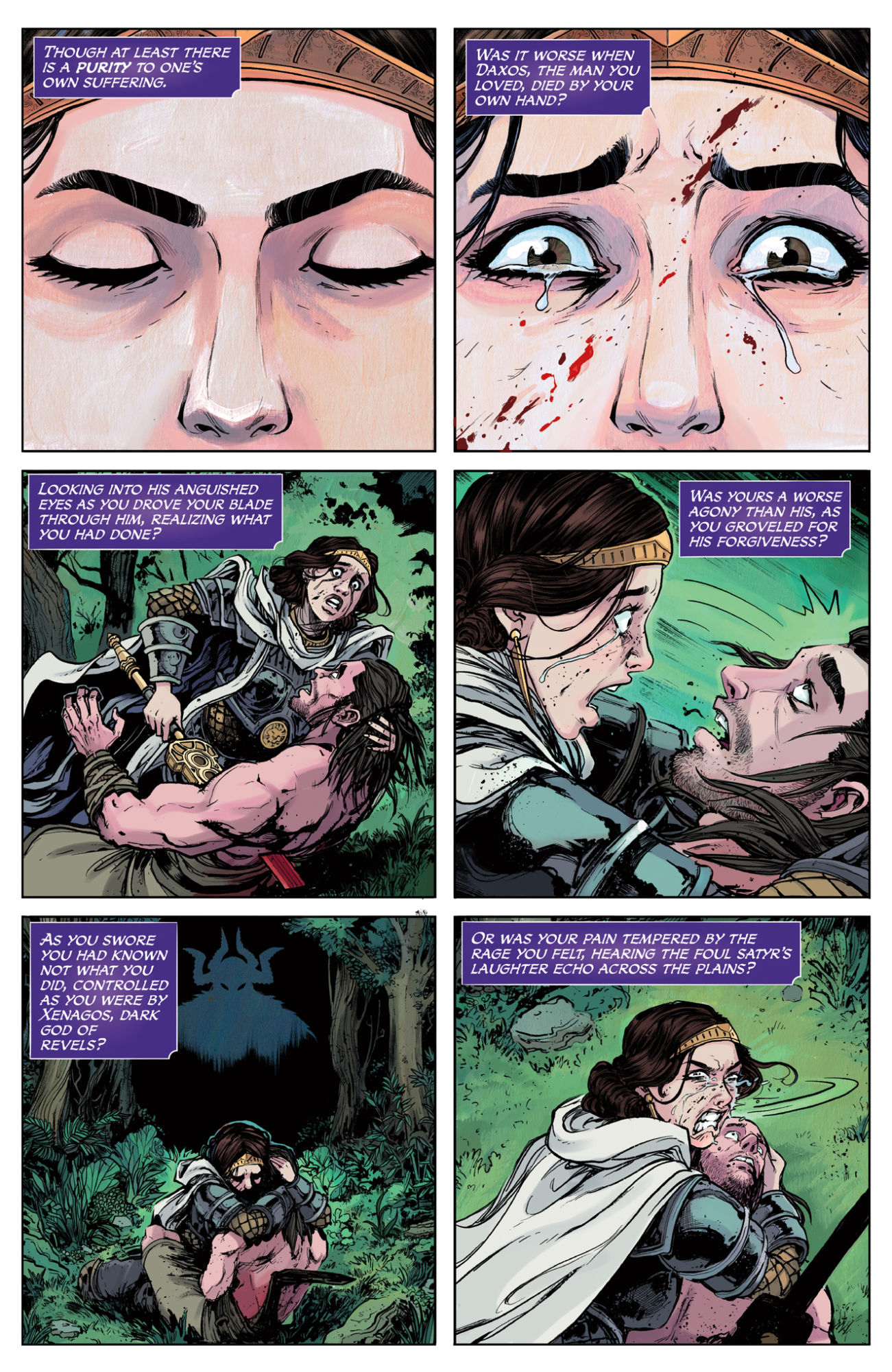
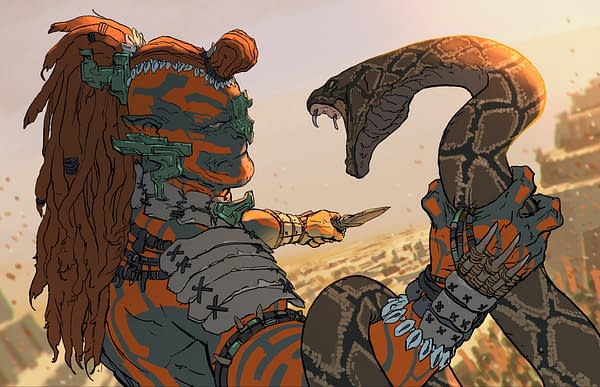
Several things at once. First of all, after 30 years of being a commercial artist, I wanna do something that challenged me personally in every aspect of my skill set. So as a writer, as a designer, as an artist, as a graphic designer, as a product manager, et cetera. Since I’m always getting booked for one skill set in particular by a client, I never have the feeling that I’m being able to put 100% of myself to the plate. And so I needed to develop a project that would challenge me to have me sink my teeth in and actually produce something that requires all these different adjacent skill sets to work together and orchestrate something that is this massive in output. The other thing is I always wanted to do a fantasy series that was focused on the human condition rather than the classic tropes of fantasy. I wanted to explore two civilizations clashing for the first time in a first-contact scenario, rather than, bring some escapist fantasy to the page, as in, you’re riding your dragon or having a magic sword or a super mighty wizard. I think the more realistic literature stuff that inspired Orken like All Quiet on the Western Front or A Day in the Life or even Misiwich are classics that have not been explored in the fantasy genre enough, and I just want to bring that level of maturity to it.
Obviously there’s temptation out there with all creators of like, “if this thing is really awesome, why don’t I pitch it to someone else?” What made you decide that you want to keep this in-house rather than be like, “I’ll go take this to this other company to try and produce it”?
Look, I only trust myself when it comes to finishing something. I’ve heard all the promises in the world of publishers wanting to help you out with marketing or doing this or that. They get 90% of the cut. I just didn’t see that as a viable path forward. If I’m already doing 100% of creation, I just need to own this thing all the way through, and then it needs to be self-published. I don’t want somebody to step in on the last mile and then tell me that we need to change the marketing or that they don’t like a certain drawing or a certain page in there and have some clinical problem with it and want me to change it. It wouldn’t be authentic in that respect. I just wanted this to feel as authentic and as close to my heart as possible. So the only way to do that is to publish it yourself.
What was kind of the process of developing it over the years, and how much of the story kind of morphed and changed from the original concept that you had in your mind to the final product?
So the original was created back in 2001, so it was over 25 years ago. The original manuscript is very close to what the final product looked like. What I lacked back then as a young person was just the skill set and the maturity to treat this in the way that I treated this iteration. I just needed to age and the idea needed to gestate and have enough time to really grow solid in my mind before I would be able to have the courage to sit down and actually do it. You can have a great idea as a young person, but you might not have the skills developed and sharpened enough yet to do the story justice. And I didn’t want to fumble this because it was so close to my heart, and I always felt so strong about this idea that I wanted to be a mature artist when I actually tackled this so that I don’t doubt myself in the process.
What was the driving force behind the art style? Were there any specific inspirations that you drew from? Or is this more like an amalgamation of ideas, and they all just kind of came together for how it looks?
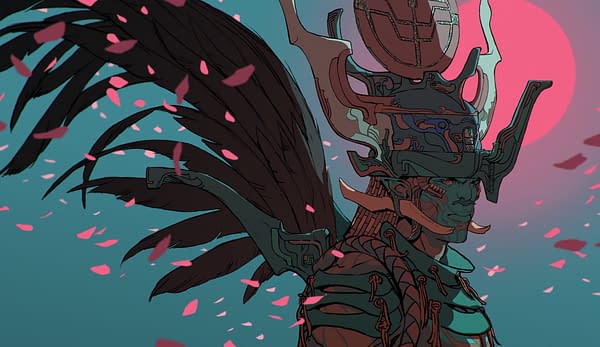
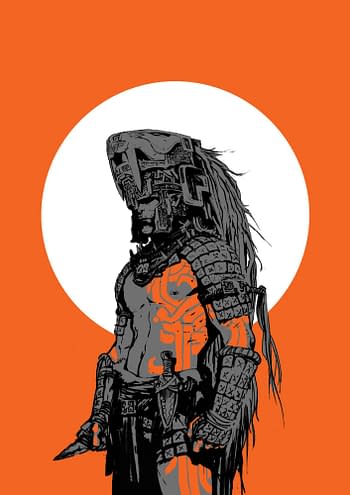
For the art style specifically, I wanted something that can seamlessly translate between illustration, animation, and 3D gameplay. I want something that you could look at on the page and it feels exactly the same as it feels when you play it in the game. That is really the core principle of the design language. So if you look at the illustrated work right in front of you, and then you go play the demo on Steam, it’s a seamless transition. Because sometimes you have IPs that look great on paper, but then their translation into different media breaks them apart and changes them fundamentally. I personally, as a consumer, get taken out of it, and I just wanted for this particular thing to feel exactly the same no matter what medium you are using to consume it.
-

- Image provided courtesy of SIXMOREVODKA
-
- Image provided courtesy of SIXMOREVODKA
What are your thoughts kind of going into the official debut, coming all the way back to Lucca and really giving people a first chance to dive in and see what you’ve created?
Well, I already know that the world itself is successful within the audience that I’ve groomed over the years. Those fans that are following me that have helped the Kickstarter to be a success, they already know what they’re in for, and they’re happy and excited. What I want is to broaden the perspective here and give it a chance to be found and explored by a completely new audience. So I’m going to look specifically for that, trying to gain as much exposure with this as possible, so a lot more people get brought into it and just think and live a longer shelf life in the future.
What’s kind of the plan that you have after Lucca for as far as releasing it and getting other chapters or episodes out to the public from there?
So the way the project is structured right now was the Kickstarter launched with all the Wave 1 products. This is your prelude to the story, so to speak. It’s the first establishing shot. Where is it happening? Who are the characters? What’s the core element of the story? And then next year we’re going to continue with Wave 2. That is like our Empire Strikes Back moment, where the IP starts really growing into its own and diversifying also in the types of content that we’re going to be putting up.
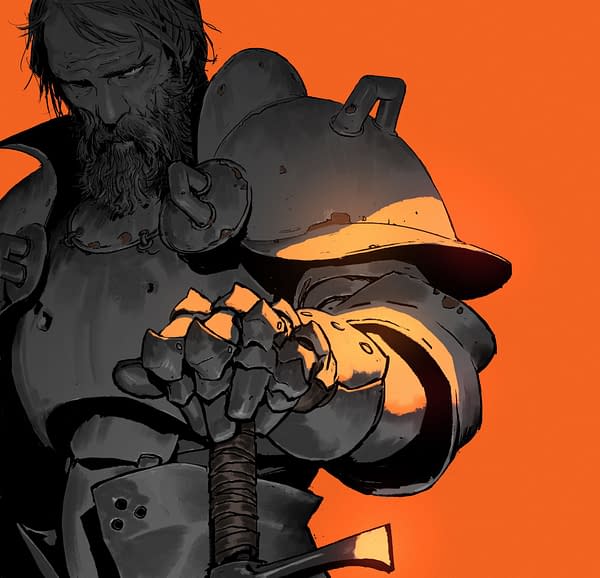
For the people who are uninitiated to this world and they’re discovering it for the first time, what do you hope they kind of take away from it?
That you can still do exciting new things with very minimal means and that you don’t have to reinvent the wheel, but you have to rethink it. And by rethinking it, creates something that is istantly familiar but feels completely original.
Enjoyed this? Please share on social media!



Stay up-to-date and support the site by following Bleeding Cool on Google News today!