

“I like to listen back to the choices,” Quadeca (aka Ben Lasky) says, stressing the word as he takes me through this year’s Life 1 with extreme joy.
The choices are everything for a producer whose MO has been shaped by a bubbly personality, extensive world-building, and a left-field brain where bossa nova, folk, and pop exist within the same song. That yielded a distinct patchwork of sound that’s as visually stunning as it is emotionally wrought, putting him in rooms with Kevin Abstract, Sky Ferreira, and Danny Brown. Lasky’s taken leaps before, but none more so than moving from the high-concept, ambitiously cinematic scale of 2025’s Vanisher, Horizon Scraper to making an album that uses stock sounds, a 2001 Casio keyboard, and harsh, unpolished mixes, recorded on tour buses and road trips.
Read more: Kevin Abstract’s SoCal Network
Early on, “CELERY” is a short, spacey voice memo that wonders how something 95% water lives as a solid with “a good crunch, you know, good composition to it.” “It goes like this” is littered with horse whinnies, handclaps, and 8-bit lasers. Serious reflections sit alongside deeply unserious effects. “All the animal noises, I made it so they’re going around your head,” Lasky says, describing the way the harmonies bounce around on the album closer “In another life…” “It’s like you’re in a tunnel. I’m trying to make it sound like a reincarnation portal. It’s spinning, and you’re moving through, and the sound is reverberating around your full dimensional being.”
#image-none-ebea1d9b-8487-4655-9c3b-0f6fa053963a .pubp-image__figure picture {
}
Dimitry Mak
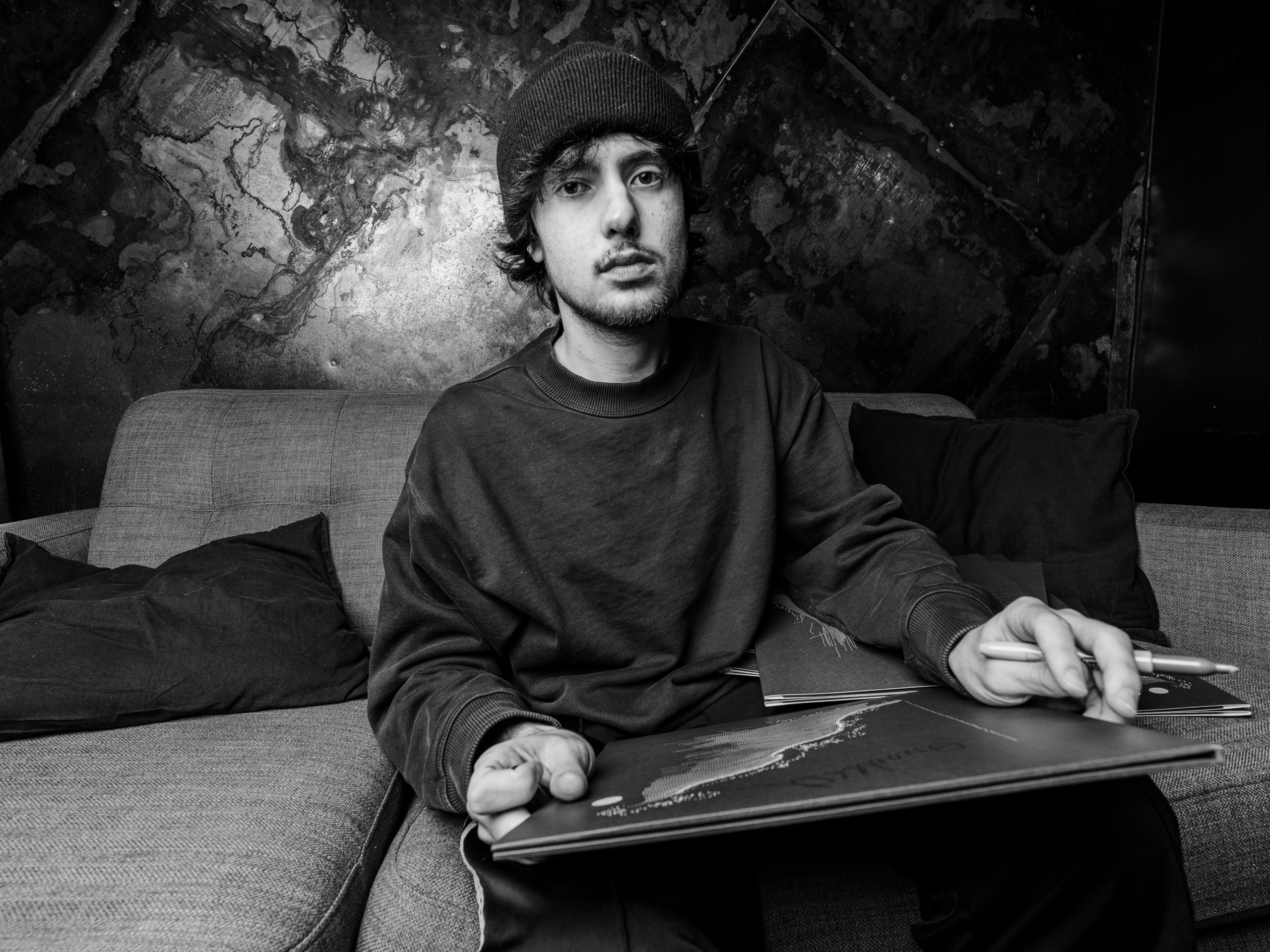
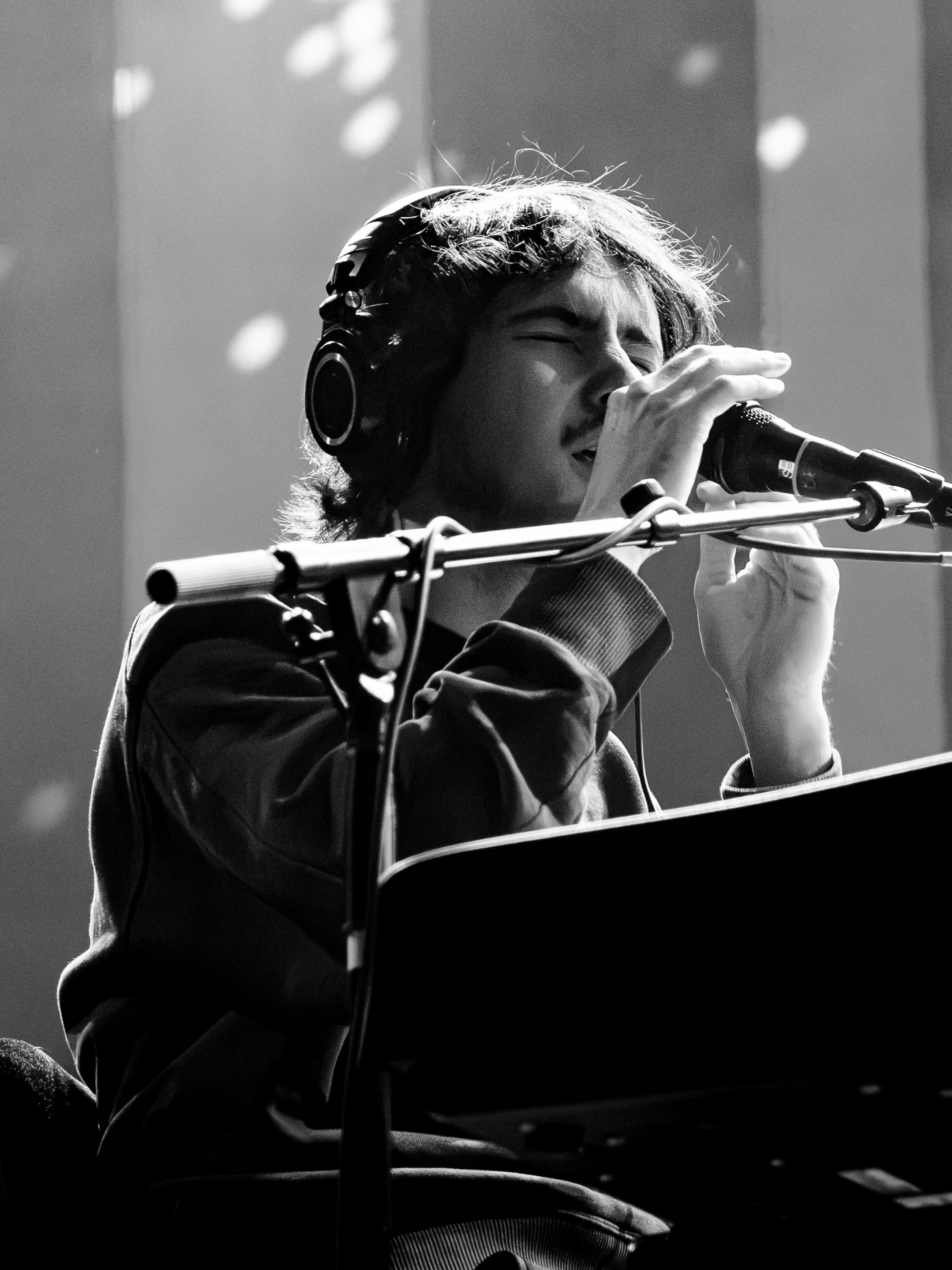
Onstage, he’s prone to slip into the same goofy, observational stream-of-consciousness. “I’ve noticed the amount of brick buildings,” he says during a tour stop in Lakewood, Ohio. “There’s actually more brick buildings than I’ve really ever seen in a suburban context. I saw so many brick houses, gas stations, fast food places…” Then he launches into “Life 1 (where did the time go),” to rapturous cheers. He’s got nonstop energy, moving from jittery intensity that turns the room into a blur of jumping bodies to quieter, dramatic piano swells, and 30 minutes after the show ends, he hasn’t lost an ounce. We’re sitting upstairs at Mahall’s, next door to The Roxy where he just performed, and he’s running me through the tour highlights. Lately, he’s been playing a lot of soccer, kicking the ball around before the venues fill up with die-hards who lose their voices singing along (and linger outside afterward, sitting cross-legged on the pavement in hopes of getting vinyl signed). Those same people often bring gifts, which tonight included a portrait of the hand-drawn red flower he uses as his profile picture — made entirely out of Rubik’s cubes.
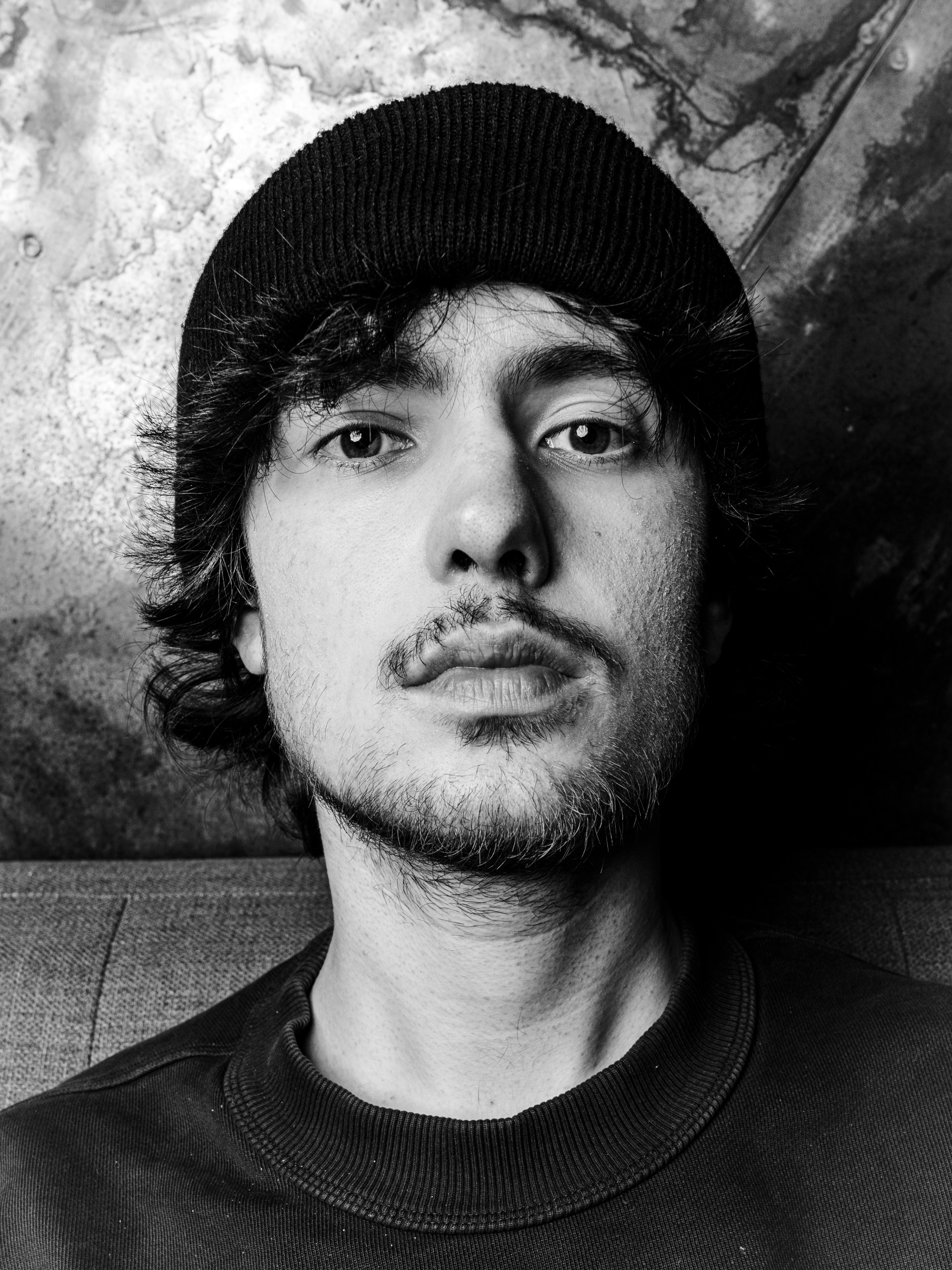
Performance was always in his blood. As a kid in Los Angeles, then the Bay Area, Lasky describes himself as “a ham. I liked performing and doing bits, to the point where I could’ve been mistaken for a young gay kid.” Ever since he was 5 or 6, he wanted a camera so he could post videos to YouTube and play songs — a need to document came early. He also loved soccer, to an obsessive degree. “I have OCD as an adult, so I also had OCD as a kid, which manifests in interesting ways — a little less anxiety-inducing, more fun,” he recalls, a pair of headphones draped around his neck. “I had to wear a soccer jersey every day, and if I didn’t, I would freak the fuck out. I had a routine of specific soccer jerseys that I had to wear. Lots of weird little neurotic things that were quirky.” By ages 7-11, he embraced singer-songwriting, where he’d look up words he liked on iTunes and then buy or stream the top song. Because he still has the same Apple ID, he realized he was listening to all kinds of disparate bands — the Smashing Pumpkins, Neutral Milk Hotel, “Weird Al” Yankovic.
#image-none-f19b36c0-c71d-4d32-a4b4-0a4478cfbe2a .pubp-image__figure picture {
}
Dimitry Mak
That segued into uploading videos on YouTube, where he swung between video game commentary — largely about FIFA — and freestyle raps. The channel, QuadecaX8, grew rapidly, and by late 2018, he posted a diss track about fellow YouTuber KSI, who called him a fraud. It received more than 8 million views in 10 days. From there, Lasky made his debut album, 2019’s Voice Memos, at 17 and has since put out four more, going full bore with the immersive, genre-flipping epic Vanisher, Horizon Scraper (even dreaming up a 70-minute album film, shot mostly in the Mediterranean).
Lasky has never been someone who could stick to a lane, genuinely appreciative of the Great American Songbook while not being constrained by it. “A good sad Christmas song is not good because it’s nostalgic,” he argues. “It’s good because they made a song that served its purpose. When you listen to ‘Silver Bells’ and ‘A Charlie Brown Christmas,’ you don’t need to have heard that as a kid to still feel it.” Instead, he throws dozens of distant influences together to create a mosaic that is both incredibly meticulous and dizzyingly expansive. While hip-hop was once the base, his songs are warped with ambient textures, chamber-pop radiance, flashes of emo, warbly pop hooks, and an assortment of heavily layered string arrangements. Whatever the mood, it is approached with deep care and crate-digger curiosity. On a past tour stop in El Paso, Lasky went into a thrift store and discovered a bunch of “two-dollar trash vinyl” that didn’t exist anywhere else. “Like weird Mennonite choir and high school Christmas concert recordings that were pressed to vinyl in the ’70s and ’80s,” he elaborates. “And so I bought all these one-of-a-kind decaying records, and then I’ve been sampling them.”
#image-none-51a3630e-5ea5-4da1-afb7-ebe6218715de .pubp-image__figure picture {
}
Dimitry Mak
Listening to Life 1 all the way through, I can’t place any of those samples, but it’s clear the songs run a lot closer to his true self, accepting the absurdity of life. There’s a playfulness, imperfection, and unguarded enthusiasm that color the tracklist, sounding at home with himself. It doesn’t ask the listener to have a profound experience, though that side exists if they want to go deeper — calling it “a reversible jacket of an album.” Traveling through its 14 songs, the gradient turns from wacky samples and ad-libs (like the aforementioned “CELERY”) to heavier emotionality like heartbreak, regret, and the passage of time. The latter, it seems, gets harder and harder to contend with: “I said, how soon a lot of things change/But no, not a thing changed about you,” he sings on “Good grief,” building to an exorcism of blown-out guitars.
“The Life 1 idea is like a reverse YOLO,” Lasky explains, saying that right now is just a first cut. You get a bunch of lives, and you use that knowledge to be free or accept your fate, do what you can. “But it’s the tone of the progression and the way that you feel when you leave the album. I want it to be this unsettling whimsy or this beautiful, almost cartoonish acceptance of the absurdity of what it means to be alive, but approach those things from a place of humor and irreverence and silliness, having all these sound effects of different animals in the songs.” No one can deny its childlike glee — a reflection of someone taking immense pleasure in seeing how far they can develop an idea.
“Every time I’ve been around Ben, since the first time I met him in Houston to make ‘NOLA’ on [Kevin Abstract’s] Blush, he’s always been so in control of his vision and how he steers his art to a beautiful place,” Love Spells says, a rising artist who Lasky has championed and collaborated with. “I admire his love for the game. He’s truly someone who’s serious and also beautifully unserious about it all. Seeing him live, it is like watching a movie character.”
#image-none-024b7b79-7ef0-4dba-98b4-2bbea172d600 .pubp-image__figure picture {
}
Dimitry Mak
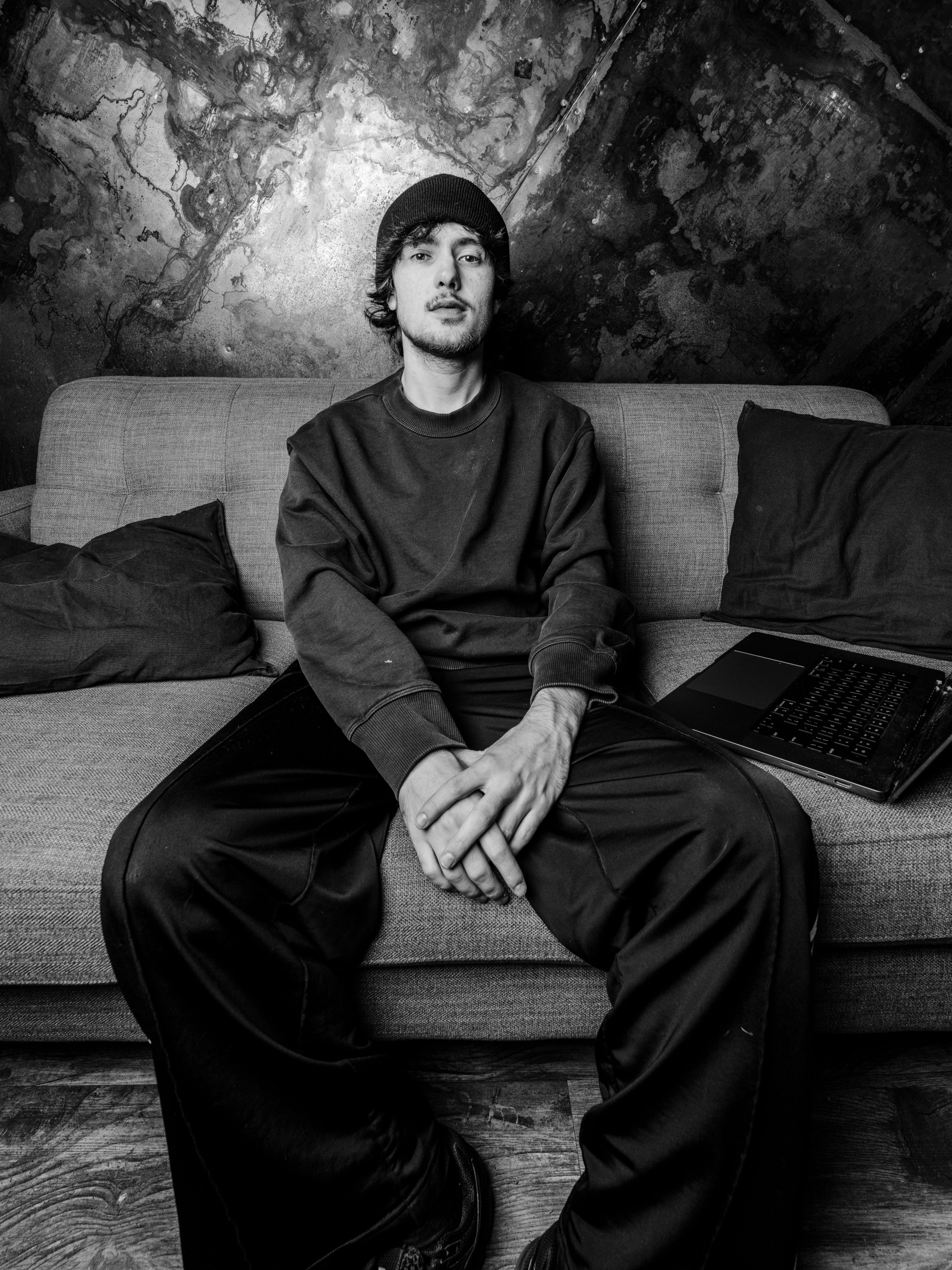
It wasn’t always that way. From ages 14 to 18, Lasky tells me he was more influenced by wanting to survive socially than create lasting art. “You become more aware of trying to find your place in the world, and that could make your art good from an angsty perspective, but it didn’t make mine good,” he says. He was more in tune with that artsier side of himself when he was younger, when he wasn’t thinking about music from a critical or commercial standpoint and instead chasing singer-songwriter impulses. It was for the love. “A lot of times I’m trying to get that sauce back,” he says. “And the more that I can get back to that, the albums come out better.” He’s come a long way since, often explaining a memory or process in ecstatic, verbose detail and other times needing a moment to gather his thoughts. “Some of these are hard to answer because they’re lifelong questions, so I’m still trying to figure them out,” Lasky admits, laughing.
Taste has defined his career, giving him a specific type of energy, attitude, and perspective that feeds his own curiosity. As he mentioned onstage earlier, “I got a lot of sounds, man.” No two projects are alike, but they’re all imbued with huge feeling — the sound of an artist who’s inclined to operate out of sync. “When you allow yourself to be affected by what’s going on, as soon as that’s not happening anymore, then you’re cooked,” he says. “Then you look like you had no spine. And that’s the worst thing you can do.”


