The 2000s offered a lot of different kinds of films, from the resurgence of R-rated comedies to hardcore trends in horror. It was a decade where the full spectrum of filmmaking styles was well on display, and that bears out in its best and worst releases. For all its essential films, though, there were many more that flew under the radar. Some were misunderstood masterpieces that were critically panned, while others simply never found the audience they deserved.
Look at any individual year of the 2000s, and there’s simply no shortage of underseen or underappreciated films that fell through the cracks but deserve to be counted among the quality films of the decade. Many of these come from master filmmakers working deep into their careers but didn’t hit at the time, while others were simply too dark or weird to ever find mainstream acceptance. Either way, these movies are the most underrated of every year in the 2000s.
2000: ‘The Tao of Steve’

A low-key romantic comedy that’s as easy-going as its lead character, The Tao of Steve gives character actor Donal Logue a rare chance to shine in the lead role as an unlikely ladies’ man, Dex, whose success with women stems from his adherence to the titular tao. He’s a kindergarten teacher with unhealthy habits who bases his life on the cool essences of famous Steves from pop culture, such as The Six Million Dollar Man and Steve McQueen.
His way of life is challenged when Dex meets a friend from college, who seems impervious to his methods, forcing him to reassess his life and consider the concept of forming genuine human connections. The Tao of Steve rests solely on the schlubby shoulders of Logue, one of the best utility players of his generation of actors. He excels in the lead, lending incredible charm to one of the most satisfying and underrated comedies of the 2000s.
2001: ‘The Pledge’

Well-reviewed by critics but coldly received by audiences, The Pledge is a bleak neo-noir starring Jack Nicholson as a retired detective who becomes consumed with solving the last case he ever worked, that of a murdered young girl. As directed by Sean Penn, The Pledge is far from a conventional procedural, eschewing typical thrills for more contemplative character exploration.
Nicholson gives one of the best performances of the latter half of his career, bringing an incredible weariness to his haunted character and his obsessive investigation. It’s a very adult thriller, not only in terms of its content but also in how it refuses to placate baser audience desires for tidy resolutions or unnecessary action sequences. That subversion of convention left many moviegoers upset with the film, as is evidenced by its low Cinemascore, but for more patient viewers, it offers a rewarding cerebral challenge.
2002: ‘Bubba Ho-Tep’

A collaboration between two cult heroes of horror, the genre-defying Bubba Ho-Tep teams B-movie king Bruce Campbell (of Evil Dead fame) with Phantasm director Don Coscarelli for one of the most wildly original movies of the 2000s. Based on the novella by Joe R. Lansdale, the movie stars Campbell as an aging Elvis Presley impersonator who insists he’s the real king of rock ‘n’ roll. Sadly, he can’t convince anyone else in his East Texas retirement home except for a man who insists he’s John F. Kennedy, played by prominent Black actor Ossie Davis. That’s not to mention the cowboy-clad mummy that begins to suck the souls of their fellow retirement residents.
With such an outlandish premise, it would be easy to assume the film is over-the-top exploitation, but it’s actually surprisingly earnest, with Campbell giving an incredibly nuanced and emotional performance. Obviously, given its pedigree and subject, Bubba Ho-Tep was never destined for mainstream success, but it has also earned a more subdued cult status than the other films of either Campbell or Coscarelli, perhaps due to its more melancholic approach. Regardless, it’s a film that should be sought out by fans and skeptics alike, as it’s bound to surprise every viewer with its unique charms.
2003: ‘The Hunted’

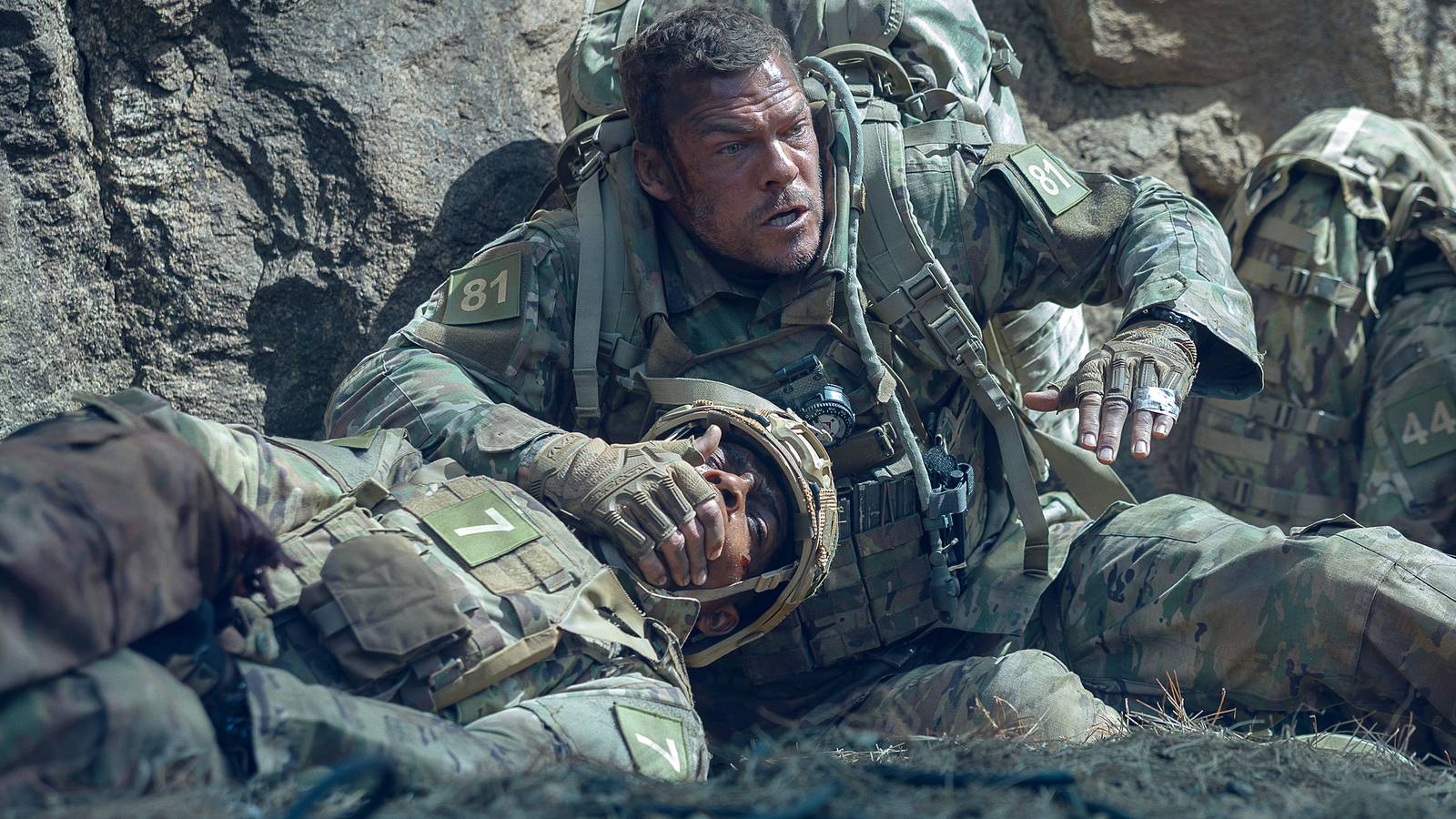
A stripped-down, brutal and bloody thriller, The Hunted has immense talent working both in front of and behind the camera, but it received very little fanfare from critics, who ignorantly dismissed it as a lackluster First Blood knock-off and felt its understated style was a flaw instead of a feature. Directed by William Friedkin, the film focuses on the war between two men, played by Benicio del Toro and Tommy Lee Jones. Del Toro plays Aaron Hallam, a special forces vet whose severe PTSD has left him a violent shell of his former self. Hiding out in the Oregon wilderness, Hallam cuts a violent path of destruction that leads the authorities to seek out his former trainer, a survivalist named L.T., played by Jones, to track him down.
Perhaps audiences were turned off by the prospect of watching Jones hunt down another fugitive on film, as he had already done twice. Those who did turn out for the movie were likely shocked at the level of violence and humorless tone. In hindsight, The Hunted seems ahead of its time, presaging the grittier action thrillers that would become popular in the next decade, and any fans of those owe it to themselves to seek out Friedkin’s gritty actioner.
2004: ‘The Ladykillers’

Widely considered to be the worst film by the Coen Brothers, this southern-fried remake of the classic Ealing black comedy heist thriller The Ladykillers features an all-star cast and the writer-director’s typical screwball sensibility. Alas, it failed to charm either critics or audiences, who felt it was too broad. Joke’s on them, because the movie is a hoot and a half with some of the strongest comedic work from Tom Hanks as the silver-tongued leader of a crew of hapless criminals whose plot to rob a river casino hinges on the use of a kindly church lady’s cellar.
In addition to Hanks’ Colonel Sanders-esque Southern gentleman, the movie gets maximum mileage out of Marlon Wayans as the foulmouthed inside man, J.K. Simmons as a demolitions expert with IBS, and Ryan Hurst as a musclebound meathead so thick he’s literally named Lump. While it might seem relatively minor in the careers of the Coens, The Ladykillers still steals more laughs than most of the other major comedies from the same year.
2005: ‘Kiss Kiss Bang Bang’

Before his career resurged with Iron Man three years later, Robert Downey Jr. headlined this crime comedy, which served as the directorial debut of acclaimed screenwriter Shane Black. As a career thief who poses as an actor to evade the police, Downey finds himself quickly whisked off the streets of New York City and into the Hollywood Hills, hobnobbing with the rich and famous before he gets pulled into a mystery worthy of a dime store detective novel.
Black excels at breaking down genres and writing dynamic duos, which he gets here with Downey alongside Val Kilmer as a slick private investigator. Despite garnering strong notices for Downey, Kilmer, and Black, Kiss Kiss Bang Bang floundered at the box office, but has rightly earned its reputation as one of the best movies of 2005 that nobody saw. This delightful caper is hard-boiled meets tongue-in-cheek and requisite viewing for fans of its three key players.
2006: ’16 Blocks’

While Bruce Willis would return as John McClane only one year later in the bombastic Live Free or Die Hard, it’s this more gritty action-thriller that feels like the more appropriate Die Hard sequel. Willis’ broken-down, alcoholic NYPD detective Jack Mosley is definitely McClane-coded, if not a little less quippy, and he also gets a sidekick, but instead of a jabber-jawed Justin Long, it’s a mush-mouthed Mos Def. Willis’ weary detective is tasked with escorting him the titular distance to testify, meeting a great deal of resistance from armed assailants along the way.
While many compared this underrated action movie to Clint Eastwood‘s The Gauntlet, it’s just as easy to see it as the downtrodden final act of Willis’ flagship franchise. The action is more gritty and grounded, but that’s appropriate for a gun-toting hero past his prime, and director Richard Donner is the perfect filmmaker to handle such action. Forget the last two Die Hard movies, throw this movie on instead and imagine it as the Logan to McClane’s Wolverine, and it’s guaranteed to hit.
2007: ‘Sunshine’

Director Danny Boyle reteamed with 28 Days Later screenwriter Alex Garland for this sci-fi thriller that has quickly become the poster child for underrated 2000s movies, particularly in the wake of their success in the years after its release. Set in a future where the Sun has begun to die, the film focuses on a group of intrepid astronauts tasked with detonating a bomb to reignite it. With an incredible international cast of burgeoning movie stars and character actors, Sunshine is a cosmic thriller by way of The Wages of Fear with gorgeous visuals and heady philosophical themes.
The biggest complaint lodged against the film, both now and during its release, was the sudden turn it takes towards a more straightforward slasher-thriller in its third act. While enjoyment may vary based on that turn, it certainly is seeded in the film early on, and Boyle executes it well, but even if it turns viewers off, it can’t diminish the expertly paced two-thirds that have come before it. Sunshine aims for the stars and explodes with beautiful ambition.
2008: ‘Changeling’

While more notice has been given to Clint Eastwood‘s other film of 2008, Gran Torino, it’s his mystery period drama Changeling that is the superior movie and the most underrated of the year. It’s anchored by a powerful performance by Angelina Jolie, who rightly received an Oscar nomination, as real-life mother Christine Collins, whose young son Walter went missing in 1928. The Los Angeles Police Department, then suffering from bad press for corruption and brutal tactics, would return Christine’s son to her five months later in an act of pure PR, except the boy they brought her was not Walter.
Christine then begins a crusade against the police department, demanding they admit their mistake and find her actual son, which they steadfastly refuse to do and have her committed to a psychiatric ward in retaliation. Eastwood excels at telling these kinds of underdog stories, but Changeling stands apart from the rest of his filmography for its feminist perspective. The movie was met with acclaim when it premiered at the Cannes Film Festival, but was more divisive among American critics, who disliked Eastwood’s conventional approach to the material. Still, this approach is exactly that quiet coolness that accentuates Collins’ determination and dignity in the face of overwhelming odds.
2009: ‘World’s Greatest Dad’

A jet-black comedy that flew so under the radar, it still barely registers as a blip for many fans of Robin Williams, World’s Greatest Dad features the late comedy star as a father and struggling writer who finally finds the success he’s been craving after his son’s accidental sex-related death is fraudulently presented as a suicide. Coming from fellow comedian Bobcat Goldthwait, who wrote and directed, the movie was never going to garner a big audience thanks to its risqué subject matter, but for certified sickos and fans of twisted satire, it’s the best film of 2009.
Many of the final films in Williams’ career failed to capitalize on the actor’s greatest talents, but World’s Greatest Dad is the perfect vehicle to channel both his dramatic abilities and darker tendencies, which were rarely utilized but always tremendously effective. Williams was a one-of-a-kind talent who left behind a number of wonderful and memorable films, and World’s Greatest Dad should be counted among them.