
You’ve decided to go with custom wedding rings rather than picking up something from a display case. Good idea, but what now?
Suddenly you are looking at a dozen metal choices, crazy price variations and terms you are not familiar with. That’s a lot to take in, and it is easy to feel stuck before you’ve even landed on a style.
However, here’s the deal: nearly all couples who order custom bands go through a few common decision points. Once you know what those are, it no longer seems like a maze and more like a fun aspect of wedding planning rather than a task. You don’t need a jewelry background to get this right. All you have to do is know the right questions to pose to yourself initially.
That’s what we are going to be addressing here.
1. Your Budget and What It Realistically Covers
Before you fall for a design, take an honest look at your overall budget range. Custom wedding bands can range from a few hundred dollars to several thousand, and the difference usually comes down to metal, added stones, and how much detail work goes into the piece. A good custom jewelry maker will actually walk you through where your money is going instead of just handing you a total.
Knowing your budget before you start browsing designs saves you from falling in love with something way outside your range. It also gives your designer something to work with, so they can point you toward options that feel just as special without the sticker shock.
Most custom orders use a staged deposit, meaning you’re not paying the full amount upfront. Ask about this early. Knowing when payments are due, and what they cover, means no awkward surprises three weeks into the process.
2. The Metal’s Long-Term Fit with Your Lifestyle
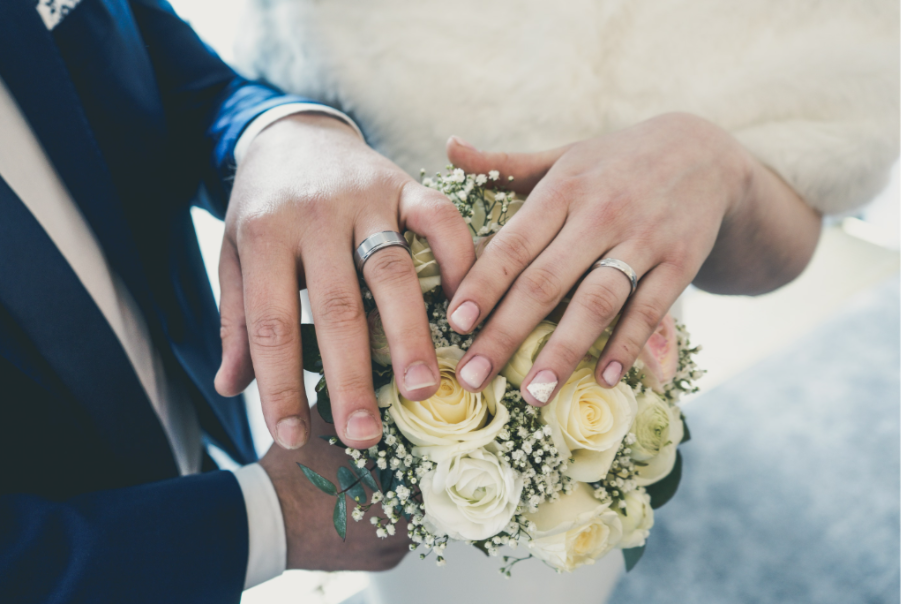
Here’s something people forget: this band isn’t going in a jewelry box most nights. It’s going on your hand, every day, for the rest of your life. So, the metal matters more than might think right now. Gold looks great, but it scratches easily. Platinum and tungsten resist dents a lot better, though you’ll pay more for that durability.
Think honestly about your hands. Do you work with tools? Hit the gym often? Wear gloves in winter and take the band off constantly? All of that wears on a band over time, and some metals simply hold up better under that kind of pressure.
Allergies matter too, more than people expect. And don’t skip the maintenance question. Some metals need polishing every so often to keep their shine, while others barely need a second thought.
3. Whether Matching or Individual Designs Suit You Both
Do you want bands that clearly belong to the same set, or two bands that reflect each of you separately? There’s no right answer here, just an honest conversation worth having before you sit down with a designer.
Matching bands tend to use the same metal, width, or finish across both bands, creating an obvious visual pair. Individual designs go the other way. Maybe he wants brushed titanium, and she wants a polished gold band with a subtle detail. Different pieces, same intention.
Bring photos. Seriously, this helps more than you’d think. Pull a few styles you’re each drawn to before your appointment, because it’s a lot easier to talk through preferences with actual examples in front of you than to describe them from memory.
4. Comfort and Fit Over Time
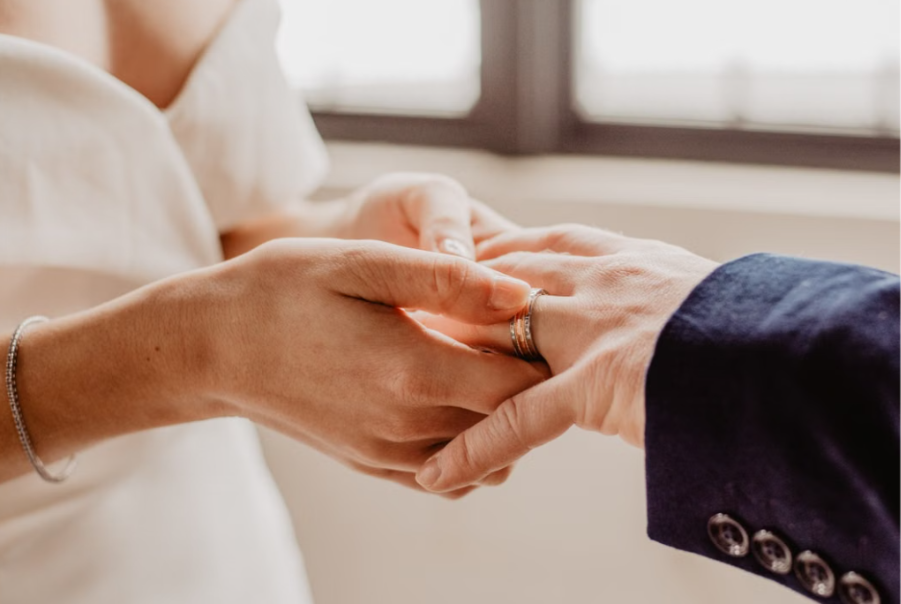
A band can look flawless in a photo and still feel wrong on your hand by hour three. That’s where comfort-fit designs come in, with a slightly rounded interior that sits smoother against your skin than a flat-backed band would.
Get sized properly, and get sized later in the day. Fingers naturally swell a bit as the day goes on, so a morning fitting can leave you with a band that feels tight by evening. Width matters too. A wider band feels completely different on the hand than a slim one, even at the exact same size.
If your hands stay active all day, whether that’s manual work or just a lot of typing and gripping, factor that in. A band that fits great today should still feel right five years from now.
5. How Much Personalization You Actually Want
Custom doesn’t mean covering every inch of the band in detail. Some couples want one quiet touch, like a date or a short phrase engraved on the inside where only they’ll see it. Others want texture on the outside instead, something like a hammered or brushed finish.
Figure out how much you actually want before your consultation. It keeps the design focused instead of pulling in five directions at once. Even small choices, like whether the edge is rounded or beveled, add up to a look that feels intentional rather than random.
Here’s a tip worth remembering: simpler designs tend to age better. You’ll wear this band for decades, so lean toward something timeless over something trendy, and only add details that genuinely mean something to you.
6. The Realistic Timeline Before Your Wedding Date
Custom bands take longer than picking something off a shelf, and that’s just the nature of building something from scratch. Consultation, design approval, production, shipping. Each stage takes real time, and skipping ahead usually isn’t an option.
Rushing the process tends to backfire. You might end up with fewer design choices, higher costs for expedited work, or a final piece that doesn’t quite match what you pictured. First drafts rarely are the final version, so give room for revisions.
A good rule of thumb is to start a few months before your wedding, not a few weeks. It gives your designer breathing room to get things right, and it gives you room to actually enjoy the process instead of sweating a deadline.
Final Thoughts
Custom wedding bands stop feeling overwhelming the moment you know what to think through first. A little planning upfront to weigh your options means you end up with bands that fit your actual life, not just your wedding day photos.
The right bands should feel like you: comfortable, personal, and built to last well past the ceremony. Take your time, stay honest about what you want, and the rest of the process falls into place.