
PLOT: After a murder of crows abducts her baby brother, headstrong teenager Prue McKeel (Peyton Elizabeth Lee) launches a desperate rescue mission into the Impassable Wilderness—an enchanted forest hidden just beyond Portland, Oregon.
REVIEW: Nearly 13 years ago, when I visited LAIKA Studios for a behind-the-scenes look at The Boxtrolls, Travis Knight told me about Wildwood, saying it would become their most ambitious movie ever. That evening, I walked to Powell’s City of Books and bought the first volume of Colin Meloy’s Wildwood book trilogy. Shortly thereafter, I devoured the book, my brain a tangle of questions as to how LAIKA could ever match the novel’s spectacle and emotional intensity. I waited, and waited, and waited some more, for answers. Then, this October, everything I’d imagined and more came to life on a silver screen, resulting in the single greatest achievement in modern stop-motion history.
What director Travis Knight, writer Chris Butler, and the collective of artists at LAIKA have done with Wildwood is nothing short of a cinematic miracle. From the jump, Wildwood reminded me of high-fantasy films from the ’80s, movies like Labyrinth, The Dark Crystal, and The Neverending Story. Wildwood doesn’t just play on a screen; it transports you to an impossible, hand-crafted world made with meticulous care that it boggles the mind. Straight up, there were moments while watching Wildwood that made Coraline, ParaNorman, and Kubo and the Two Strings look like a practice run. For all their complexity, beauty, and ingenuity, Wildwood sets a new bar not just for the studio but for any stop-motion animated film going forward.
Walking hand in hand with the film’s visual majesty is the story, lovingly recreated, elaborated upon, and changed (for the better) by Chris Butler. Butler takes Meloy’s story and elevates it, bringing additional weight to characters like Prue, Curtis, and the expanded cast. I can’t begin to imagine how closely Butler worked with Knight to bring this cautionary tale to life, how many hours they must have spent to get every word and scene as emotionally engaging and impactful as it needed to be.
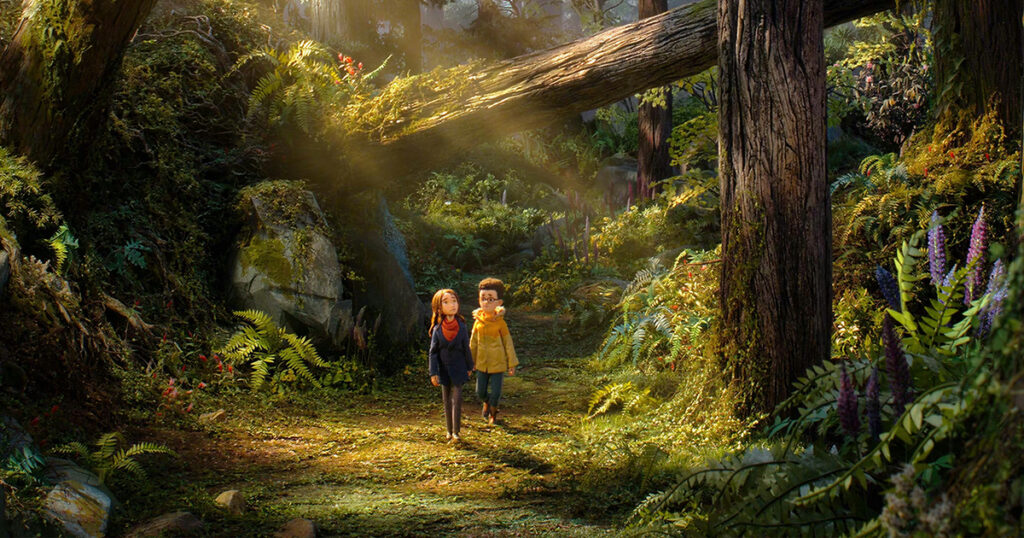
Visually, Wildwood is spellbinding. Still, as much eye candy as there is throughout the bulk of Prue’s adventure, nothing can prepare you for the finale. The Battle of the Impassable Wildness, as I like to call it, reminds me of The Battle of Helm’s Deep, with all the violence, blades, and bloodshed that come with it. I could hear people in the theater’s packed audience gasping and choking back sobs as fire and screams filled the battlefield, blood seeping into the mud and rocks. When it was over, you could hear a pin drop—everyone frozen in stunned silence.
When I remembered how to breathe again, I adjusted in my seat, completely in awe and dumbfounded by the film’s technical prowess. How long did it take to pull this off? How many hours of incremental movements, staging, and choreography were enough to move a single puppet in these scenes, let alone hundreds? When people talk about movie magic, they’re talking about LAIKA. They’re talking about the type of stuff you experience in Wildwood.
In addition to fantastical animals, peculiar humans, and sentient greenery, Wildwood is filled with inspired voice performances. Peyton Elizabeth Lee brings the house down as Prue, a young, wise-beyond-her-years woman whose innocence is lost throughout her journey. In contrast, Jacob Tremblay brings curiosity, enthusiasm, and trepidation to Curtis, a boy who finds his place in a strange, forbidden land. Together, they bring depth and richness to characters who are forever changed by the wonder and consequences of a world-changing war.
Still, my favorite performance among many has got to be Carey Mulligan as Alexandra, the Dowager Governess, a mother driven mad by the loss of her child, willing to tear a world apart if it means he could take a single breath once more. I’ve never seen so much pain, wickedness, and sorrow coming from a stop-motion animated character as I did with Alexandra. Mulligan’s equally impressive performance takes this grief-stricken witch to a dark and terrible place, her every word like a poisoned apple slice we’re meant to swallow.
Finally, Dario Marianelli’s score and alluring tracks by Rachel Fannan add regality to an already exciting atmosphere of mystery, magic, and encroaching darkness. Whether you’re soaring through the clouds atop a giant eagle, reliving a tragic tale of love and loss, or surveying the horrors of a devastating war, the music wraps LAIKA’s coming-of-age fairy tale in a warm blanket, enveloping you in myriad sensations that tap into a spectrum of emotion.
There’s nothing more satisfying than when your expectations for something you’re looking forward to are exceeded in every way. That’s the thought I keep coming back to about Wildwood. LAIKA didn’t just bring Meloy’s novel to life; they’ve made something touching, technologically insane, and timeless. It’s a masterpiece in every sense of the word. At a time when AI is infiltrating animation at an alarming rate, pantomiming creativity, stealing jobs, and killing human touch, it’s a testament to stop-motion movie-making that something as pure and grand as Wildwood exists. Invite your friends, family, and loved ones to the Impassable Wilderness. If we don’t support movies like Wildwood, we deserve exactly the type of movies that will take its place.
There isn’t a 10 that’s perfect enough for this film. See Wildwood.

The post Wildwood Review: LAIKA’s Dark, Emotional Fantasy Epic is the Single Greatest Achievement in Modern Stop-Motion History appeared first on JoBlo.