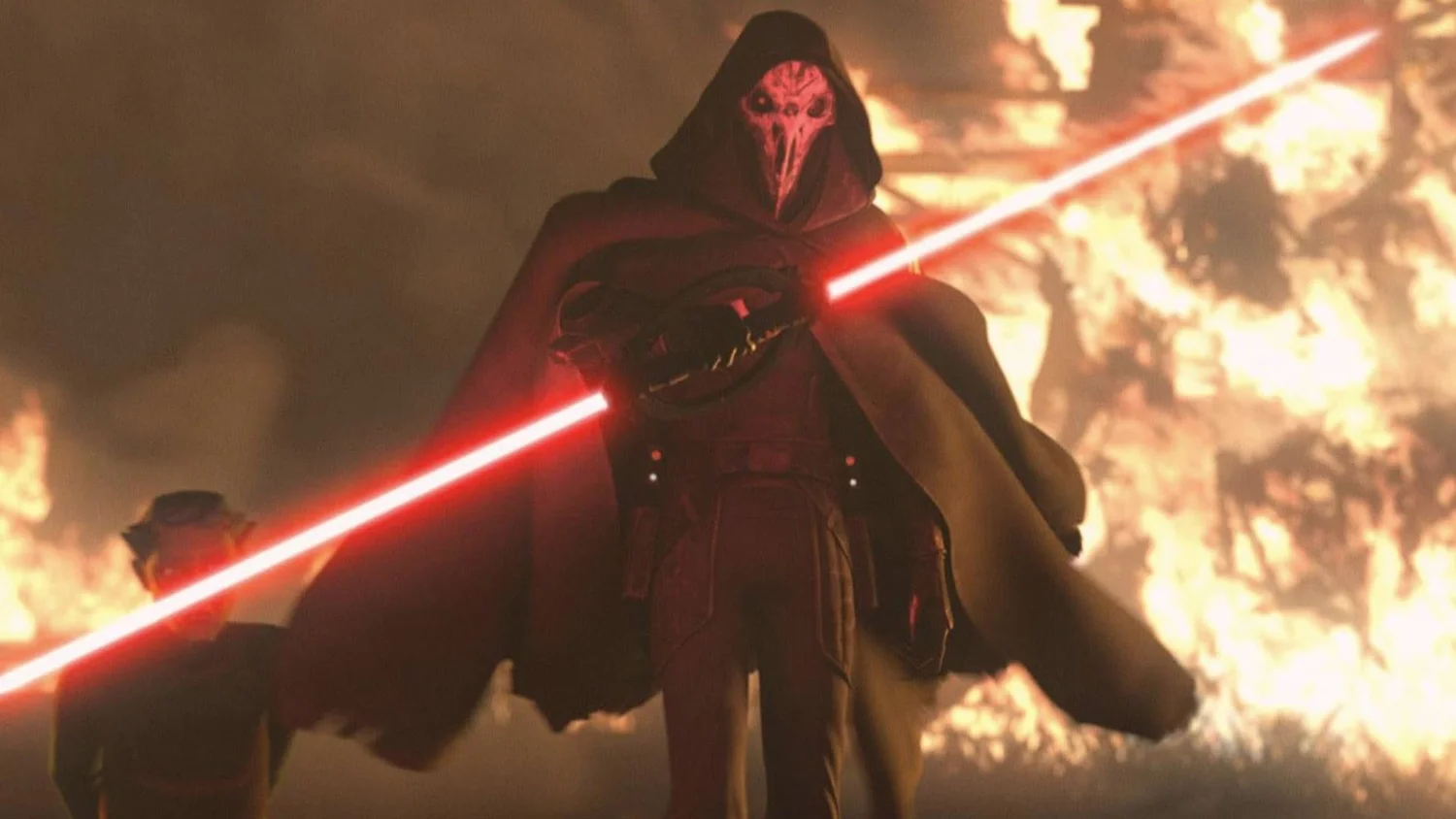
As you know, Darth Vader’s Inquisitors don’t just carry standard red lightsabers. They spin, split, and extend into those wild double-bladed weapons that look as dangerous as they are intimidating.
But there’s actually a very specific, practical reason behind that design, and it ties directly into their mission during the Empire’s reign.
Lightsabers in Star Wars have come a long way since the days when blue, green, and red were the only options on the table. As the galaxy expanded through films, shows, and games, so did the creativity.
We’ve seen everything from dual sabers to saber rifles, and a spectrum of colors that goes far beyond the Jedi and Sith divide. The Inquisitors’ spinning double-bladed sabers are one of the more aggressive evolutions, and they weren’t built just to look cool.
The Inquisitors existed for one purpose, and that is to track down and eliminate any Jedi who survived Order 66, along with other Force-sensitive individuals. That mission came with a major challenge. Surviving Jedi weren’t always alone.
A master and their Padawan could have escaped together, working as a team to stay alive in the aftermath of the purge. That possibility meant the Empire needed hunters who could handle multiple opponents at once.
That’s where the double-bladed design comes in. In theory, it allows an Inquisitor to defend and attack in two directions at the same time, making it easier to engage a pair of Jedi simultaneously.
It’s the same logic behind Darth Maul’s iconic weapon in Star Wars: Episode I – The Phantom Menace. His master, Emperor Palpatine, likely wanted him prepared for exactly that kind of fight, and Maul proved he could handle it when facing both Qui-Gon Jinn and Obi-Wan Kenobi.
Despite their intimidating gear, the Inquisitors rarely measure up to the Jedi they’re hunting or the Sith they serve. Reva Sevander’s encounters in Obi-Wan Kenobi highlight that gap pretty clearly.
Whether she’s facing Darth Vader or clashing with far less powerful opponents, she struggles to maintain control in combat. And she’s not the only one.
Marrok’s fights tell a similar tale. When he crosses paths with Ahsoka Tano in Ahsoka, it doesn’t end well for him. Even outside of that, when going up against Maul again in Star Wars: Maul – Shadow Lord, he falls short.
These are supposed to be elite Jedi hunters equipped to take on multiple opponents, yet they often can’t handle a single experienced Force user.
That pattern speaks to a bigger issue. The Inquisitor program, much like Order 66 itself, didn’t fully achieve what it set out to do. Sure, they eliminated a number of Jedi and Force-sensitives during the Empire’s rise, but they didn’t wipe them out.
Luke Skywalker, Obi-Wan Kenobi, and Yoda all made it through, and as Star Wars storytelling has expanded, the list of survivors has only grown. Ahsoka Tano, Kanan Jarrus, Ezra Bridger, Kelleran Beq, Grogu, and others all slipped through the cracks.
So while the double-bladed lightsaber was designed as a tactical advantage, it couldn’t make up for the limitations of the Inquisitors themselves. The weapon was built for efficiency against multiple enemies, but skill, training, and connection to the Force still matter more than flashy design.
And in a bigger sense, their failure reinforces one of the core ideas that runs through Star Wars. Even when darkness spreads and systems fall, it never fully wins.
You can hunt down the Jedi, dismantle their Order, and arm your enforcers with specialized weapons, but something always survives. New heroes rise, new hope appears, and the fight continues.
The Inquisitors’ double-bladed sabers might look like the ultimate tool for domination, but in the end, they’re just another reminder that you can’t engineer total control over the Force or the people who follow it.